Key takeaways
- Thymosin beta-4 is a 43-amino-acid peptide found in nearly every human cell. TB-500 usually refers to its synthetic form, or sometimes a short fragment.
- Its main known role is sequestering G-actin, which regulates the cytoskeleton and cell migration.
- Research covers skin wounds, the heart and the cornea. Most of it is preclinical, though Tβ4 formulations have reached early clinical trials.
In this guide
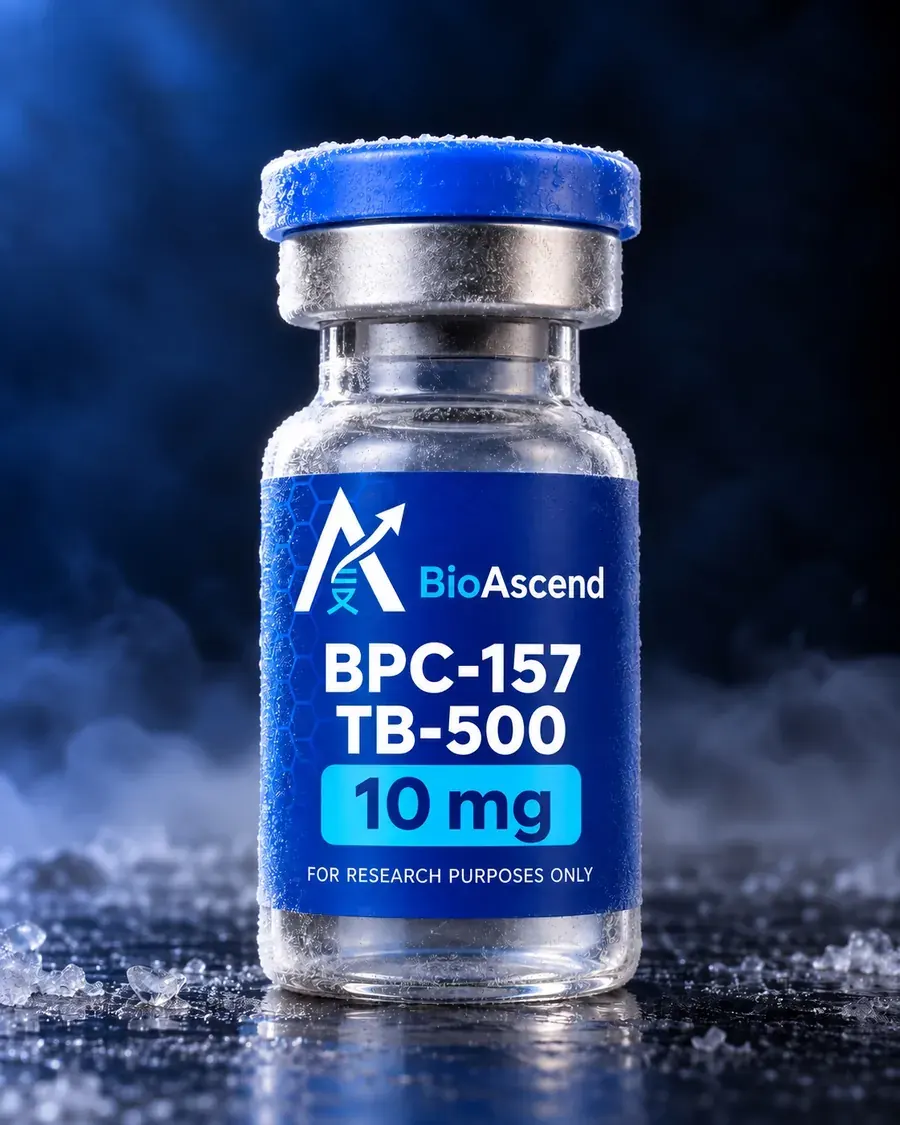
View the BPC-157 + TB-500 blend →What is TB-500?
Thymosin beta-4 (Tβ4) is a 43-amino-acid peptide with a molecular weight of 4,963.5 g/mol (CAS 77591-33-4). It's present in almost all human cells and is particularly abundant in platelets and white blood cells.
"TB-500" is the name commonly used in the research market for synthetic Tβ4. The term is also sometimes used for a shorter fragment containing Tβ4's actin-binding region, so it's worth checking a product's certificate of analysis to see exactly what it contains.
The actin connection
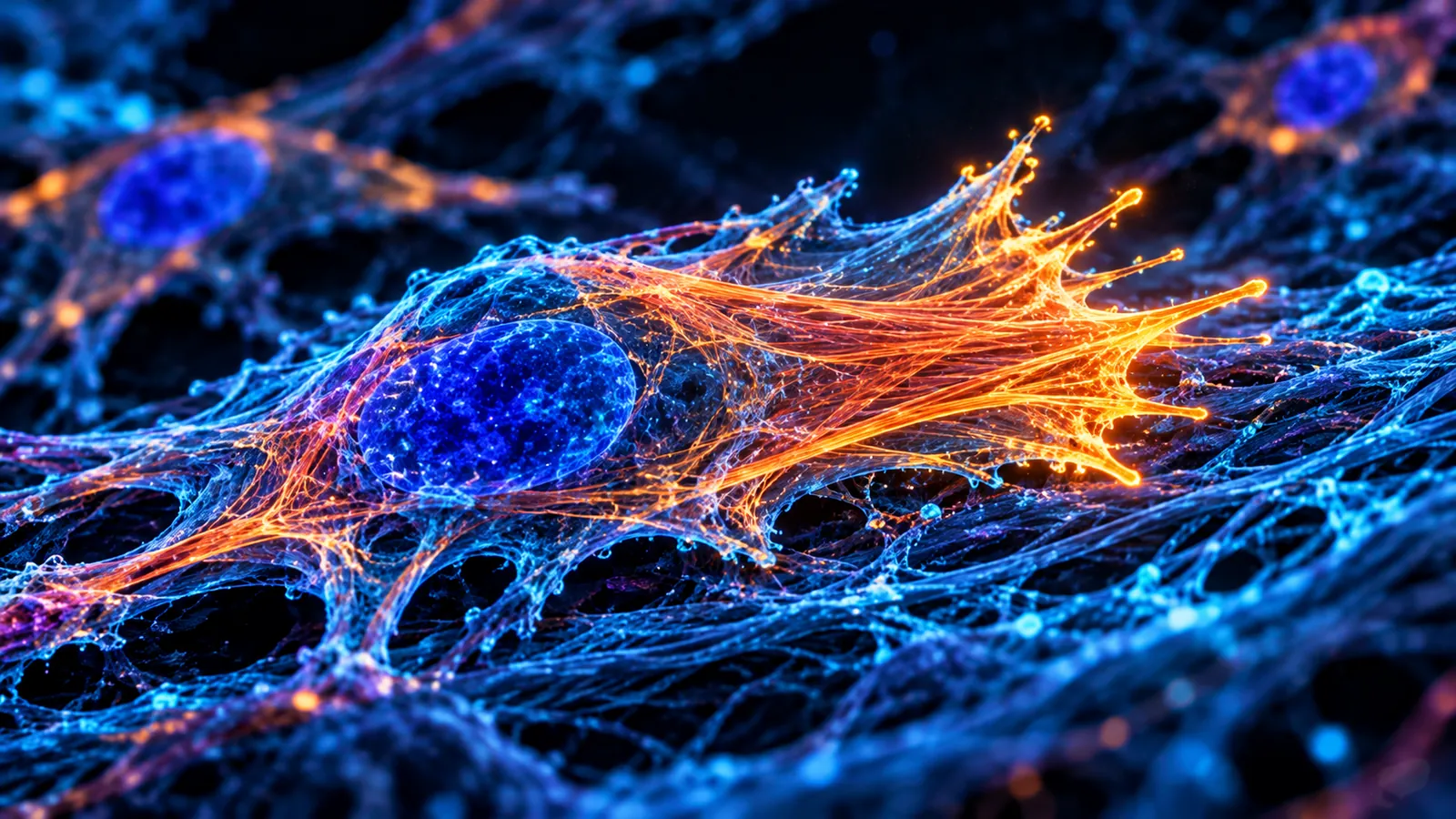
Actin is the protein that forms the cell's internal scaffolding, the cytoskeleton. Cells move by rapidly building and dismantling actin filaments at their leading edge. Tβ4 is the main actin-sequestering peptide in many cell types: it binds single (G-) actin molecules and holds them in reserve, controlling how fast filaments can be built.
That control over cytoskeletal remodelling is why Tβ4 research centres on cell migration, the step in repair where cells move into a damaged area. The short sequence responsible for actin binding (LKKTETQ, residues 17–23) is the region often associated with the TB-500 fragment.
Key areas of tissue-repair research
Skin wound healing
An early study reported that Tβ4 accelerated wound healing in rats, with increased cell migration and new blood-vessel formation in the wound (Malinda et al., Journal of Investigative Dermatology, 1999).
Cardiac models
A widely cited paper reported that Tβ4 activated integrin-linked kinase and promoted cardiac cell migration, survival and repair in a mouse model of cardiac injury (Bock-Marquette et al., Nature, 2004). Later work examined its effects on cardiac progenitor cells.
The cornea
Tβ4 has been studied extensively in corneal injury models, and ophthalmic Tβ4 formulations have been tested in early-stage human clinical trials.
Angiogenesis and inflammation
Across models, Tβ4 has been linked to new blood-vessel formation and to reduced inflammatory signalling. A smaller N-terminal fragment, Ac-SDKP, is studied separately for anti-fibrotic effects.
What the evidence does and doesn't show
- Mostly preclinical. Most findings come from cell culture and animal models.
- More clinical history than BPC-157, mainly early-stage trials of specific pharmaceutical Tβ4 formulations, but no approved Tβ4 medicine.
- Fragment vs full peptide. Research on full-length Tβ4 can't automatically be applied to shorter fragments sold as TB-500, or the reverse.
- Regulatory status: TB-500 is named among unauthorized peptides in Health Canada's 2026 advisory, and TB-500 is listed under S2 on the World Anti-Doping Agency's Prohibited List.
Related research
TB-500 is frequently studied alongside BPC-157, which acts on different pathways. See BPC-157 vs TB-500, BPC-157: what the research shows and peptide blends explained.
Frequently asked questions
What is TB-500?
TB-500 is the name commonly used for synthetic thymosin beta-4 (Tβ4), a 43-amino-acid peptide found in nearly every human cell. The name is also sometimes used for a shorter fragment of Tβ4.
How does thymosin beta-4 work?
Its main known role is binding G-actin, which regulates how the cell's actin cytoskeleton is built and rebuilt. That controls cell migration, a key step in tissue repair.
What tissues has TB-500 been studied in?
Research covers skin wound healing, cardiac injury models, corneal injury and angiogenesis, mostly in cell and animal models.
Is TB-500 approved?
No. No thymosin beta-4 medicine is approved, and TB-500 is named among unauthorized peptides in Health Canada's 2026 advisory.
References
- Malinda KM, et al. Thymosin β4 accelerates wound healing. J Invest Dermatol. 1999;113(3):364–368.
- Bock-Marquette I, et al. Thymosin β4 activates integrin-linked kinase and promotes cardiac cell migration, survival and cardiac repair. Nature. 2004;432:466–472.