Key takeaways
- Purity (%) tells you how clean the peptide is. Quantity (mg) tells you how much is actually in the vial. A good COA reports both.
- A COA describes the specific sample that was tested. Check that the product, strength and batch match what you're buying.
- Third-party reports can be verified directly on the lab's website. If a COA can't be verified, treat it with caution.
In this guide
- What is a COA?
- Anatomy of a COA
- Purity vs quantity
- What a COA doesn't tell you
- How to verify a COA
- Red flags
- FAQ
What is a certificate of analysis?
A certificate of analysis (COA) is a report issued by a testing laboratory after it analyzes a sample of a product. For research peptides, it usually answers three questions: is this the right compound (identity), how pure is it (purity), and how much is in the vial (quantity).
COAs come in two kinds. An in-house COA is produced by the manufacturer itself. A third-party COA comes from an independent lab with no stake in the result. Third-party testing is the stronger evidence, because the lab has no reason to flatter the product.
The reports in BioAscend's COA library are third-party tests from Janoshik Analytical, an independent lab widely used in the research peptide space. The examples below are real reports from our catalogue.
Anatomy of a COA, line by line
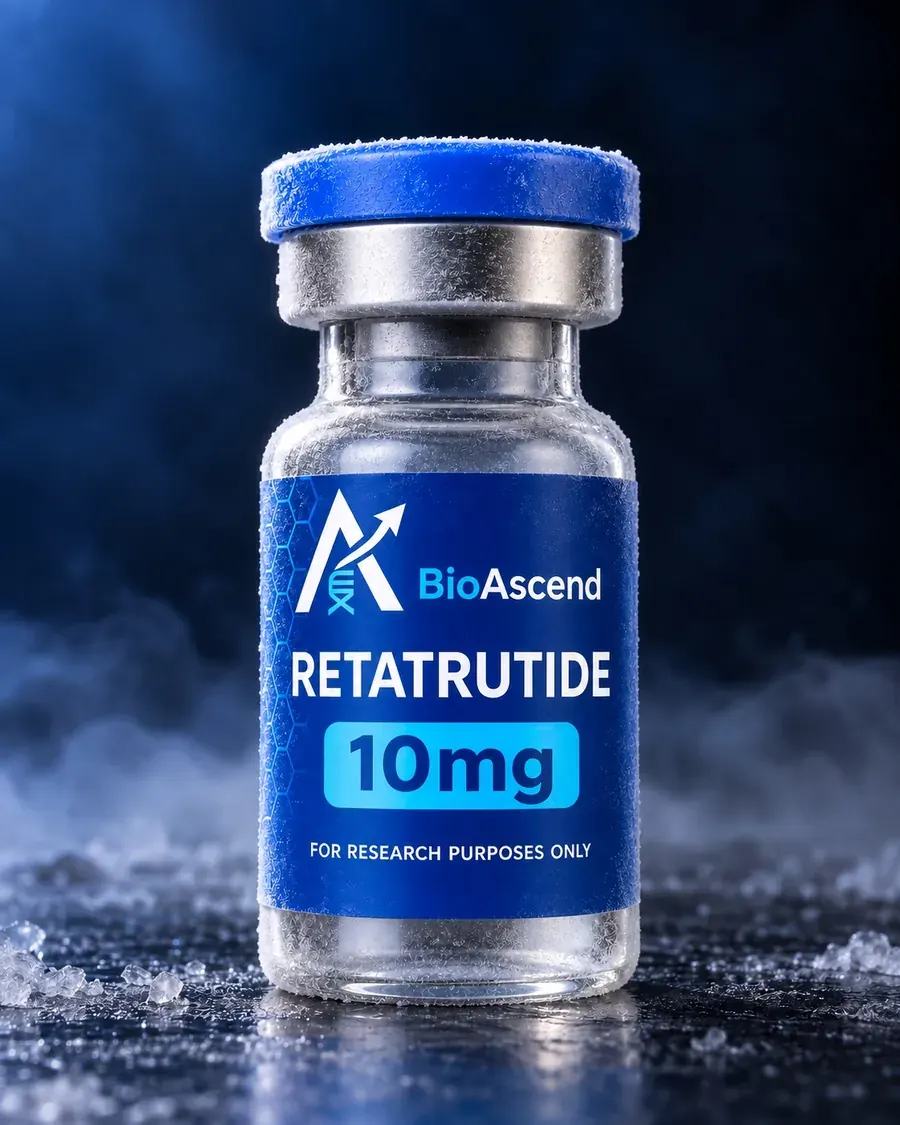
Here is the Janoshik test report for our Retatrutide 10mg. Every field on it means something, and each one is worth checking.
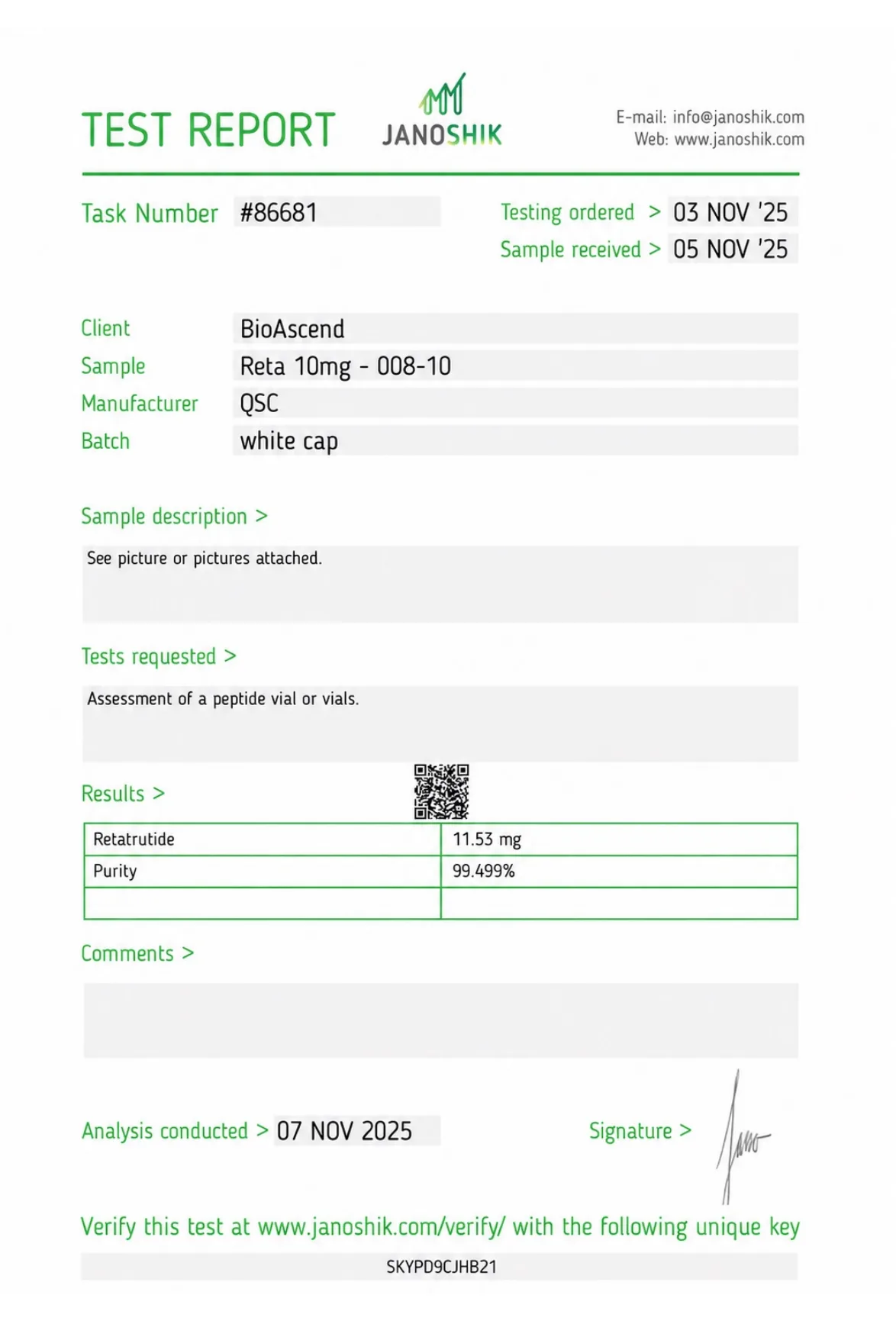
- Task number & datesThe lab's reference number (#86681), plus when testing was ordered, when the sample arrived, and when analysis was done. Recent dates matter more than old ones.
- ClientWho ordered the test. On a supplier's COA, this should be the supplier's own name. Here, it's BioAscend.
- Sample & batchExactly what was tested: "Reta 10mg", with the batch identified by cap colour. This should match the product and strength you're looking at.
- ManufacturerThe source of the material that was tested.
- Tests requestedWhat the lab was asked to measure. This tells you what the results cover, and what they don't.
- ResultsThe numbers that matter: 11.53 mg of Retatrutide in the vial, at 99.499% purity.
- Signature & verification keyA unique code (here,
SKYPD9CJHB21) you can enter on the lab's website to confirm the report is genuine and unaltered.
Purity vs quantity: the part most people miss
The results section of a COA usually contains two different numbers, and they measure different things.
Purity is usually measured with high-performance liquid chromatography (HPLC). The sample is separated into its components, and the purity figure is the share made up by the target peptide. Research-grade peptides are commonly expected to test at 98% or higher.
Quantity (sometimes called content or amount) tells you whether the vial contains what the label says. This matters just as much. A vial can be 99% pure but contain only 6 mg when it's sold as 10 mg, and a purity-only COA would never show that.
Why more than 10 mg? Measured content slightly above the label is common. Manufacturers often fill vials a little over the stated amount to allow for losses during handling. A result well below the label is the one to look out for.
Labs also confirm identity, i.e. that the compound is the one named, often using mass spectrometry, which checks the molecule's weight against the expected value. When a report lists a named compound with a measured amount, the lab has identified that compound in the sample.
What a COA doesn't tell you
A COA is strong evidence, but it has limits. Knowing them helps you read any report fairly.
- It covers the tested sample only. A COA describes the vial or vials sent to the lab. It's most meaningful when it matches the current batch of the product you're buying.
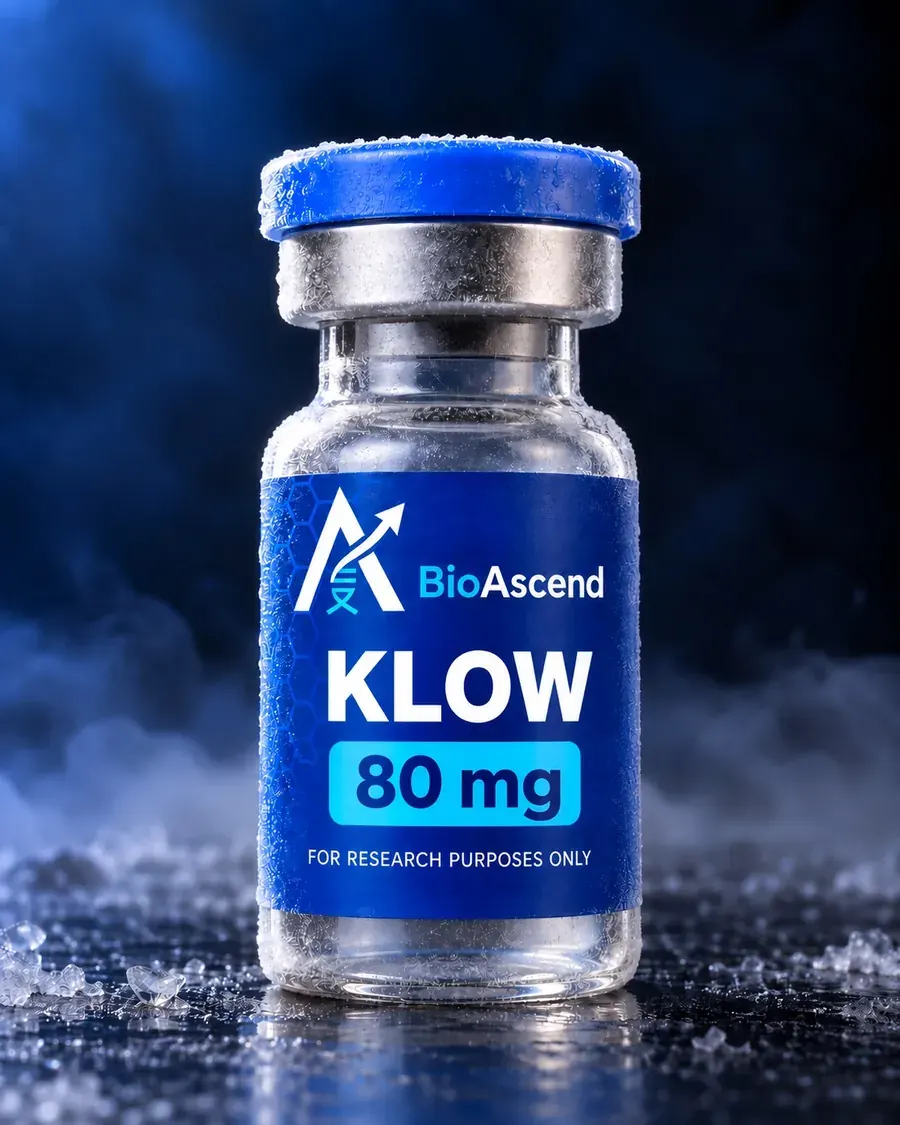
- It only covers the tests that were requested. Always read the "Tests requested" line. For example, our KLOW 80mg blend report requests "ID and amount; peptide purity not included". It confirms each of the four peptides and measures how much of each is present, but it doesn't give a purity percentage. Multi-peptide blends are often tested this way because separating four compounds for a single purity figure is less meaningful.
- Standard reports don't cover everything. Endotoxin, sterility and heavy-metal testing are usually separate tests. If a report doesn't mention them, they weren't part of that analysis.
How to verify a COA yourself
Anyone can edit a PDF. Third-party labs like Janoshik solve that with a public verification tool, and checking a report takes under a minute:
- Find the unique key at the bottom of the report, below the line "Verify this test at…".
- Go to janoshik.com/verify and enter the key exactly as printed.
- Compare the lab's copy with the one you were given. The client, sample, dates and results should all match exactly.
- Check that the sample name and strength match the product you're buying.
The Janoshik reports in our COA library carry their verification key at the bottom of the page, so you can check them yourself.
Red flags to watch for
When you're comparing suppliers, these are signs a COA deserves a closer look:
- No verification key or lab contact details. You have no way to confirm the report is real.
- Another company's name under "Client". The report may have been borrowed from a different supplier.
- A sample or strength that doesn't match the product. A 5 mg report doesn't show anything about a 10 mg vial.
- Purity only, with no quantity. You know it's clean, but not how much is in the vial.
- Very old test dates with no newer reports, especially for popular products that sell through batches quickly.
- Blurry, cropped or inconsistent formatting, such as fonts that change mid-line or numbers that look pasted in.
Frequently asked questions
What does COA stand for?
COA stands for certificate of analysis: a laboratory report that documents the results of testing a specific product sample, typically its identity, purity and quantity.
What is a good purity result for a research peptide?
Research-grade peptides are commonly expected to test at 98% purity or higher by HPLC. Many reports, including several in our catalogue, show results above 99%.
Why does my 10 mg vial's COA show more than 10 mg?
Slight overfill is common practice to allow for losses during handling. A measured amount modestly above the label is normal. A result well below the label is the one to be cautious about.
Is a third-party COA better than an in-house one?
Generally, yes. An independent lab has no stake in the result, and labs such as Janoshik let anyone verify a report online with its unique key.
Where can I find BioAscend's COAs?
All of our third-party reports are on the COA page, and each product page links to its own report.