Key takeaways
- BPC-157 is a small, 15-amino-acid peptide derived from a protein in gastric juice. It's studied mainly for its effects on blood-vessel growth, nitric oxide signalling and growth-factor pathways.
- TB-500 is synthetic thymosin beta-4, a 43-amino-acid peptide found in most human cells. Its main known role is binding actin, which controls how cells move.
- Because they act on different pathways, they're often studied together. Nearly all the research on both is preclinical (cell and animal studies).
In this guide
- At a glance
- What is BPC-157?
- What is TB-500?
- Key differences
- Why study them together
- What the research shows
- FAQ
At a glance
| BPC-157 | TB-500 (thymosin β4) | |
|---|---|---|
| Origin | Synthetic fragment of a protein found in human gastric juice | Synthetic version of a peptide found naturally in most human cells |
| Length | 15 amino acids | 43 amino acids (full-length Tβ4) |
| Molecular weight | 1,419.56 g/mol | 4,963.5 g/mol |
| CAS number | 137525-51-0 | 77591-33-4 |
| Main mechanism studied | Angiogenesis, nitric oxide signalling, growth-factor pathways | Binding G-actin to regulate the cytoskeleton and cell migration |
| Main research areas | Gastrointestinal, tendon, ligament and muscle models | Wound healing, cardiac, corneal and angiogenesis models |
| Notable property | Unusually stable in gastric juice | One of the most abundant intracellular peptides |
What is BPC-157?
BPC-157 stands for "body protection compound 157". It's a synthetic pentadecapeptide (15 amino acids) with the sequence GEPPPGKPADDAGLV, based on a section of a larger protein found in human gastric juice.
Most BPC-157 research comes from animal models, largely rodent studies of injury to the gastrointestinal tract, tendons, ligaments and muscle. Proposed mechanisms include:
- Angiogenesis: effects on the formation of new blood vessels, including signalling linked to VEGF receptor pathways.
- Nitric oxide signalling: interaction with the NO system, which regulates blood flow and vascular tone.
- Growth-factor and fibroblast activity: effects on the cells that build connective tissue.
One frequently cited study reported improved functional, biomechanical and histological measures of healing in a rat Achilles tendon model (Staresinic et al., Journal of Orthopaedic Research, 2003). Unusually for a peptide, BPC-157 is also stable in gastric juice, which is one reason it has been studied so much in gastrointestinal research.
What is TB-500?
TB-500 is the name commonly used in the research market for synthetic thymosin beta-4 (Tβ4), a 43-amino-acid peptide that occurs naturally in nearly every human cell.
Tβ4's best-understood job is sequestering actin. Actin is the protein that forms the cell's internal scaffolding. By binding monomeric (G-) actin, Tβ4 controls how quickly that scaffolding is built and rebuilt, and cells need that remodelling in order to move. That's why Tβ4 research centres on cell migration, along with angiogenesis and cell survival after injury.
A widely cited paper reported that Tβ4 activated integrin-linked kinase and promoted cardiac cell migration, survival and repair in a mouse model of cardiac injury (Bock-Marquette et al., Nature, 2004).
A note on naming. "TB-500" is also sometimes used for a shorter fragment of Tβ4 that contains its actin-binding region, rather than the full 43-amino-acid peptide. Because suppliers use the name differently, it's worth checking the certificate of analysis to see exactly what a given product contains.
The key differences
Size and structure
TB-500 is roughly three and a half times the molecular weight of BPC-157. BPC-157 is a short synthetic fragment, while Tβ4 is a complete, naturally occurring peptide.
Where they come from
BPC-157 is derived from a protein in the digestive tract. Tβ4 is found inside almost every cell in the body and is particularly abundant in platelets and white blood cells.
How they're thought to work
This is the biggest difference. BPC-157 research points mostly to signalling effects: blood-vessel growth, nitric oxide and growth-factor pathways. Tβ4 research points to a structural role: controlling the actin cytoskeleton, and with it the cell's ability to move into a damaged area.
What they're studied in
BPC-157 papers lean towards gastrointestinal and musculoskeletal models. Tβ4 papers cover a wider spread, including skin wounds, the heart and the cornea.
Why researchers study them together
Because the two peptides act on different pathways, researchers interested in tissue repair often want to look at both in the same experimental model. One targets the vascular and growth-factor side; the other targets cell movement. Studying them together lets a researcher examine whether those pathways interact.
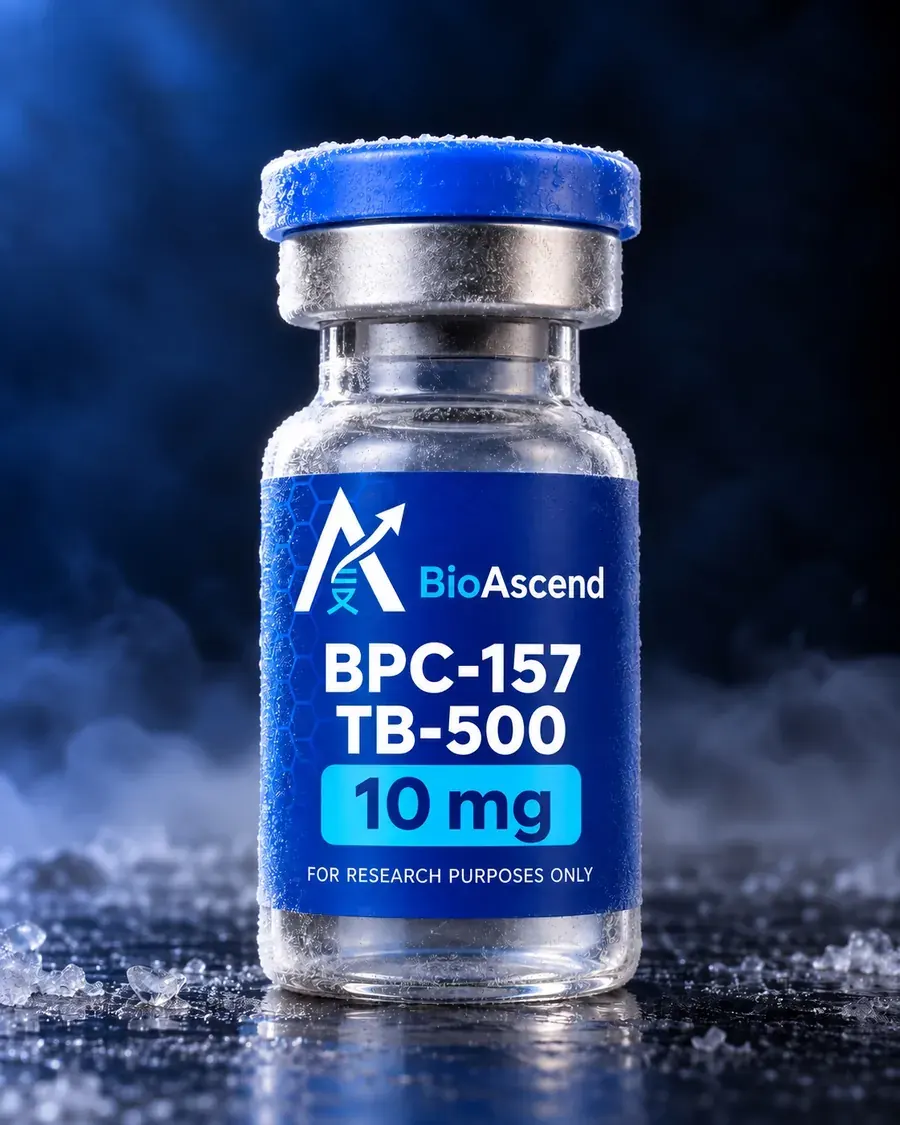
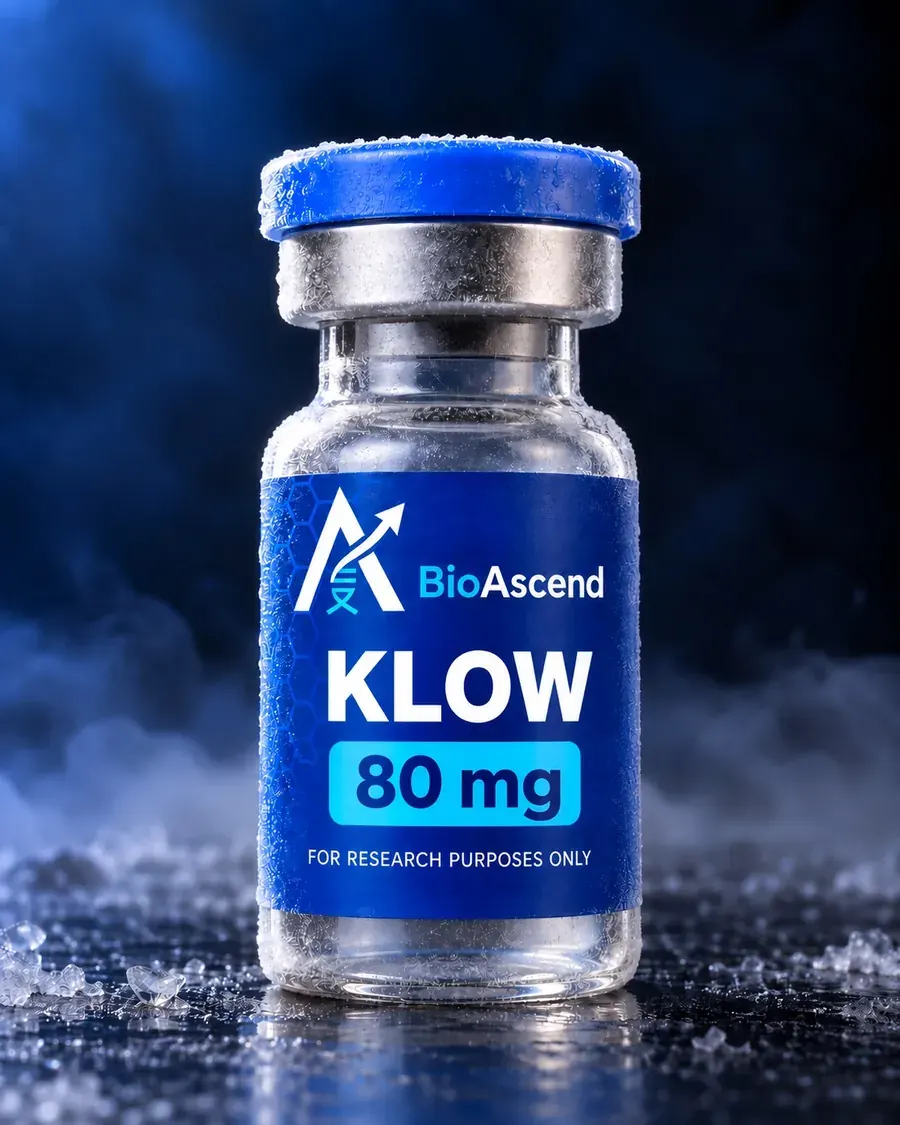
That's the reasoning behind blends such as our BPC-157 + TB-500 10mg (5mg of each in one vial) and the four-peptide KLOW 80mg blend, which pairs both with GHK-Cu and KPV.
What the research does and doesn't show
It's important to be clear about the evidence:
- Almost all of it is preclinical. The findings above come from cell cultures and animal models. Results in rodents don't necessarily carry over to other species.
- Human data on BPC-157 is very limited. There are no large controlled human trials, and no approved BPC-157 product exists in any country.
- Tβ4 has more clinical history, mainly in early-stage trials of specific pharmaceutical formulations, but it's not an approved medicine either.
- Both are banned in sport. BPC-157 is listed under S0 (non-approved substances) and TB-500 under S2 (as a thymosin beta-4 derivative) on the World Anti-Doping Agency's Prohibited List.
For researchers, the takeaway is that these are interesting tools for studying repair-related pathways, with a body of literature that is promising but still early.
Frequently asked questions
Is TB-500 the same as thymosin beta-4?
TB-500 is the name commonly used for synthetic thymosin beta-4 (Tβ4). The term is also sometimes used for a shorter fragment containing Tβ4's actin-binding region, so check the test report to see what a specific product contains.
What is the main difference between BPC-157 and TB-500?
BPC-157 is a 15-amino-acid fragment studied mainly for effects on angiogenesis, nitric oxide and growth-factor signalling. TB-500 (thymosin beta-4) is a 43-amino-acid peptide whose main known role is binding actin to regulate cell migration.
Why are BPC-157 and TB-500 sold as a blend?
Because they act on different pathways, researchers often study them in the same experimental model. A blend supplies both in one vial at a fixed ratio.
Are BPC-157 and TB-500 approved for human use?
No. Neither is an approved medicine, and both appear on the World Anti-Doping Agency's Prohibited List. BioAscend supplies them strictly for laboratory research use.
Is most BPC-157 and TB-500 research done in animals?
Yes. The large majority of published research on both peptides comes from cell culture and animal models, mainly rodents.
References
- Staresinic M, et al. Gastric pentadecapeptide BPC 157 accelerates healing of transected rat Achilles tendon and in vitro stimulates tendocytes growth. J Orthop Res. 2003;21(6):976–983.
- Sikiric P, et al. Stable gastric pentadecapeptide BPC 157: novel therapy in gastrointestinal tract. Curr Pharm Des. 2011;17(16):1612–1632.
- Bock-Marquette I, et al. Thymosin β4 activates integrin-linked kinase and promotes cardiac cell migration, survival and cardiac repair. Nature. 2004;432:466–472.