Key takeaways
- BPC-157 is a synthetic 15-amino-acid peptide based on a protein found in human gastric juice.
- Most research comes from rodent models of tendon, ligament, muscle and gastrointestinal injury, and a large share comes from a single research group.
- Human data are very limited. There are no large controlled trials, and no approved BPC-157 product exists in any country.
In this guide
- What is BPC-157?
- Research areas
- Proposed mechanisms
- Limits of the evidence
- Regulatory status
- Related research
- FAQ
What is BPC-157?
BPC-157 ("body protection compound 157") is a pentadecapeptide with the sequence GEPPPGKPADDAGLV and a molecular weight of 1,419.56 g/mol. It's a synthetic fragment based on a larger protein found in human gastric juice. Unusually for a peptide, it is stable in gastric juice, which helped drive early interest in gastrointestinal research.
Where the research is concentrated
Tendon and ligament
One of the most cited studies reported improved functional, biomechanical and histological measures of healing in a rat Achilles tendon model (Staresinic et al., Journal of Orthopaedic Research, 2003). Cell studies have reported increased outgrowth and migration of tendon fibroblasts.
Gastrointestinal tract
A large body of rodent work covers models of gastric ulcers, intestinal injury and inflammation, reviewed by Sikiric and colleagues (Current Pharmaceutical Design, 2011).
Muscle and other tissues
Further rodent studies cover muscle injury, bone, and vascular models, along with a range of other organ systems.
Proposed mechanisms
- Angiogenesis: effects on new blood-vessel formation, including signalling linked to the VEGF receptor 2 (VEGFR2) pathway.
- Nitric oxide system: interaction with NO signalling, which regulates vascular tone and blood flow.
- Fibroblast activity: effects on the migration and spreading of tendon fibroblasts, linked in cell studies to the FAK–paxillin pathway.
- Growth-factor signalling: changes in growth-factor receptor expression in repair models.
These mechanisms come from cell and animal studies and are best described as proposed rather than established.
The limits of the evidence
An honest reading of the BPC-157 literature has to include its weaknesses:
- Mostly animal studies. The great majority of findings come from rats and mice. Results in rodents often fail to carry over to other species.
- Concentrated authorship. A large share of the published studies come from one research group at the University of Zagreb. Independent replication by other groups is more limited.
- Very little human data. Human evidence consists of a handful of small pilot studies. There are no large randomized controlled trials.
- Unknowns. Long-term safety, and how findings in injury models translate beyond them, have not been established.
Why this matters: online summaries often present BPC-157's preclinical findings as proven effects. For researchers, the literature is best treated as a set of promising hypotheses that still need independent confirmation.
Regulatory status
- Not approved anywhere. No approved BPC-157 product exists in any country.
- Canada: Health Canada has named BPC-157 among unauthorized peptides in a 2026 public advisory.
- United States: In July 2026, an FDA advisory committee narrowly voted (8–6) to recommend adding BPC-157 to the list of substances US compounding pharmacies may use. The vote is non-binding, FDA staff had recommended against it, and it has no effect in Canada.
- Sport: BPC-157 is listed under S0 (non-approved substances) on the World Anti-Doping Agency's Prohibited List.
Related research
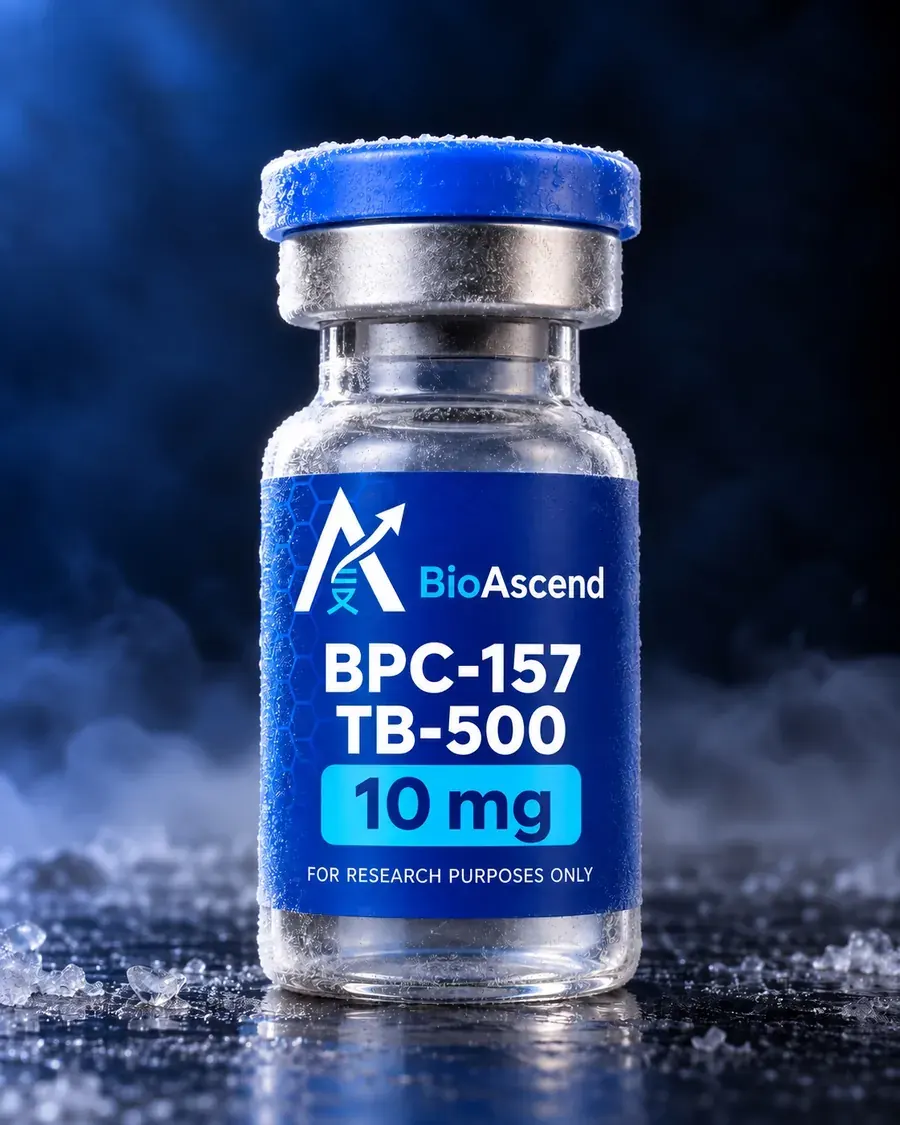
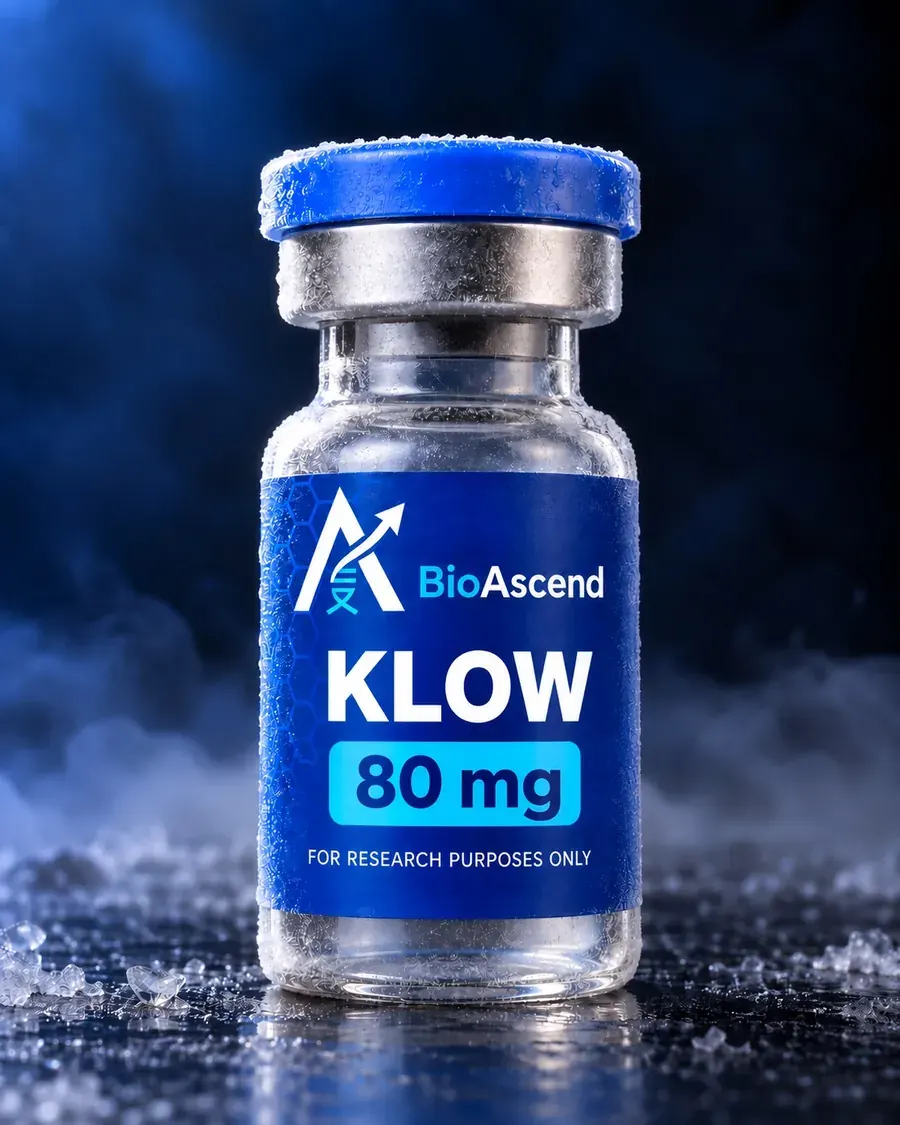
BPC-157 is frequently studied alongside thymosin beta-4 (TB-500), which acts on a different pathway. See BPC-157 vs TB-500 and TB-500 and tissue repair research. BioAscend supplies BPC-157 in the BPC-157 + TB-500 blend and the four-peptide KLOW blend.
Frequently asked questions
What is BPC-157?
BPC-157 is a synthetic 15-amino-acid peptide (GEPPPGKPADDAGLV) based on a protein found in human gastric juice. It's studied mainly in animal models of tendon, ligament, muscle and gastrointestinal injury.
Is there human research on BPC-157?
Very little. Human evidence is limited to a handful of small pilot studies, and there are no large randomized controlled trials.
Is BPC-157 approved?
No. No approved BPC-157 product exists in any country. In Canada, Health Canada has named it among unauthorized peptides.
How is BPC-157 thought to work?
Proposed mechanisms from cell and animal studies include effects on angiogenesis (including VEGFR2 signalling), the nitric oxide system and fibroblast migration. These remain proposed rather than established.
Is BPC-157 banned in sport?
Yes. BPC-157 is listed under S0, non-approved substances, on the World Anti-Doping Agency's Prohibited List.
References
- Staresinic M, et al. Gastric pentadecapeptide BPC 157 accelerates healing of transected rat Achilles tendon and in vitro stimulates tendocytes growth. J Orthop Res. 2003;21(6):976–983.
- Sikiric P, et al. Stable gastric pentadecapeptide BPC 157: novel therapy in gastrointestinal tract. Curr Pharm Des. 2011;17(16):1612–1632.
- Chang CH, et al. The promoting effect of pentadecapeptide BPC 157 on tendon healing involves tendon outgrowth, cell survival, and cell migration. J Appl Physiol. 2011;110(3):774–780.
- Hsieh MJ, et al. Therapeutic potential of pro-angiogenic BPC157 is associated with VEGFR2 activation and up-regulation. J Mol Med. 2017;95(3):323–333.