Key takeaways
- A blend combines compounds in one vial at a fixed ratio. A bundle is several separate vials sold together.
- Blends are usually built around compounds that act on different, complementary pathways.
- The trade-off is flexibility: you can't change the ratio, and testing reports for blends often look different from single-compound reports.
In this guide
Browse all products →Blends vs bundles
| Blend | Bundle | |
|---|---|---|
| Format | Several compounds in one vial | Separate vials, one per compound |
| Ratio | Fixed | Set by the researcher |
| Reconstitution | One vial, one solution | Each compound prepared separately |
| Testing | Each component identified and measured in the same vial | Each vial tested on its own |
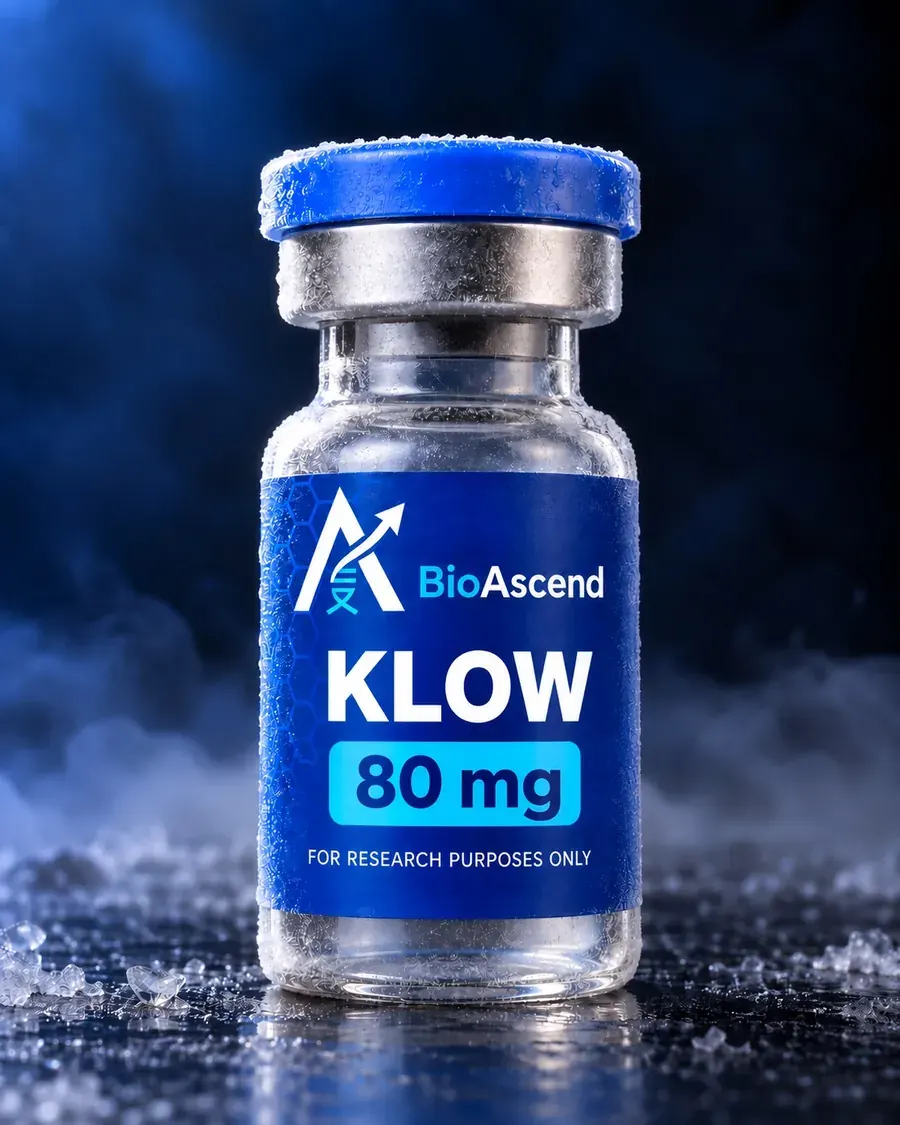
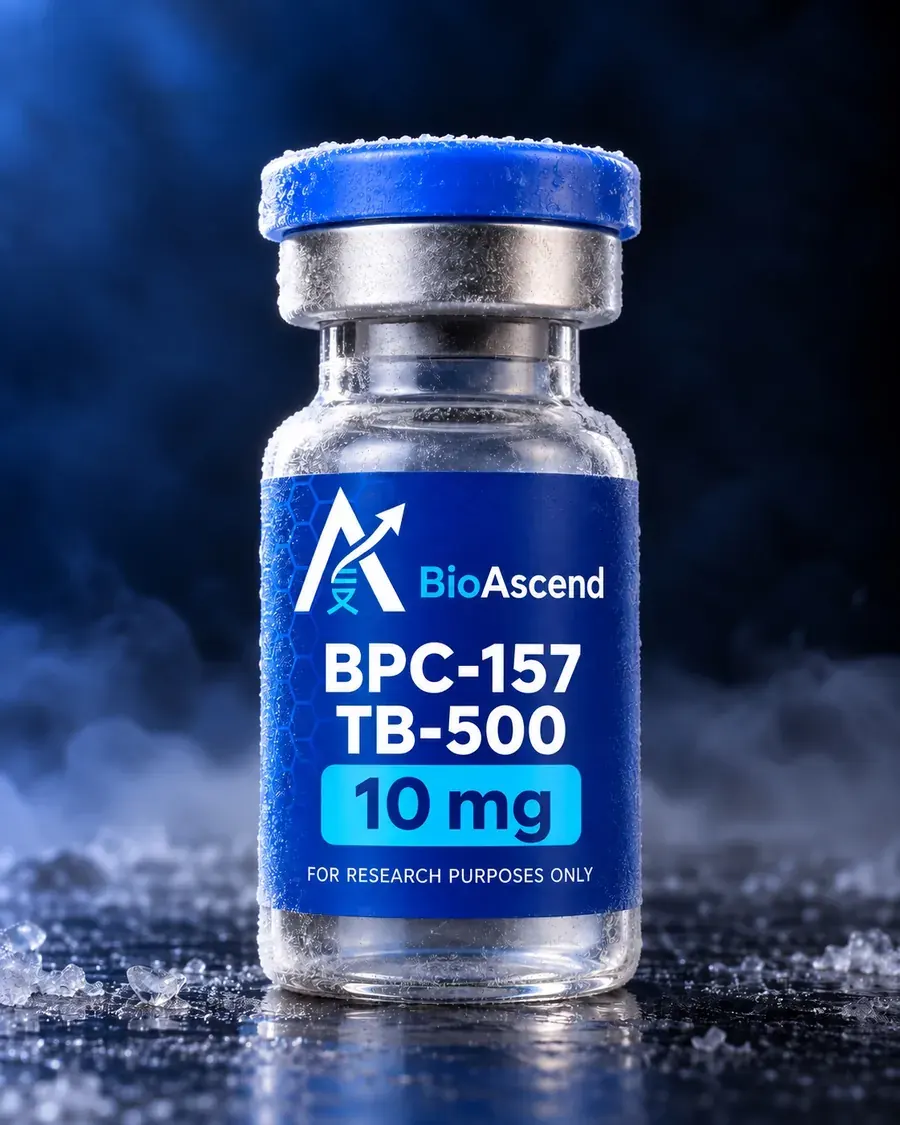
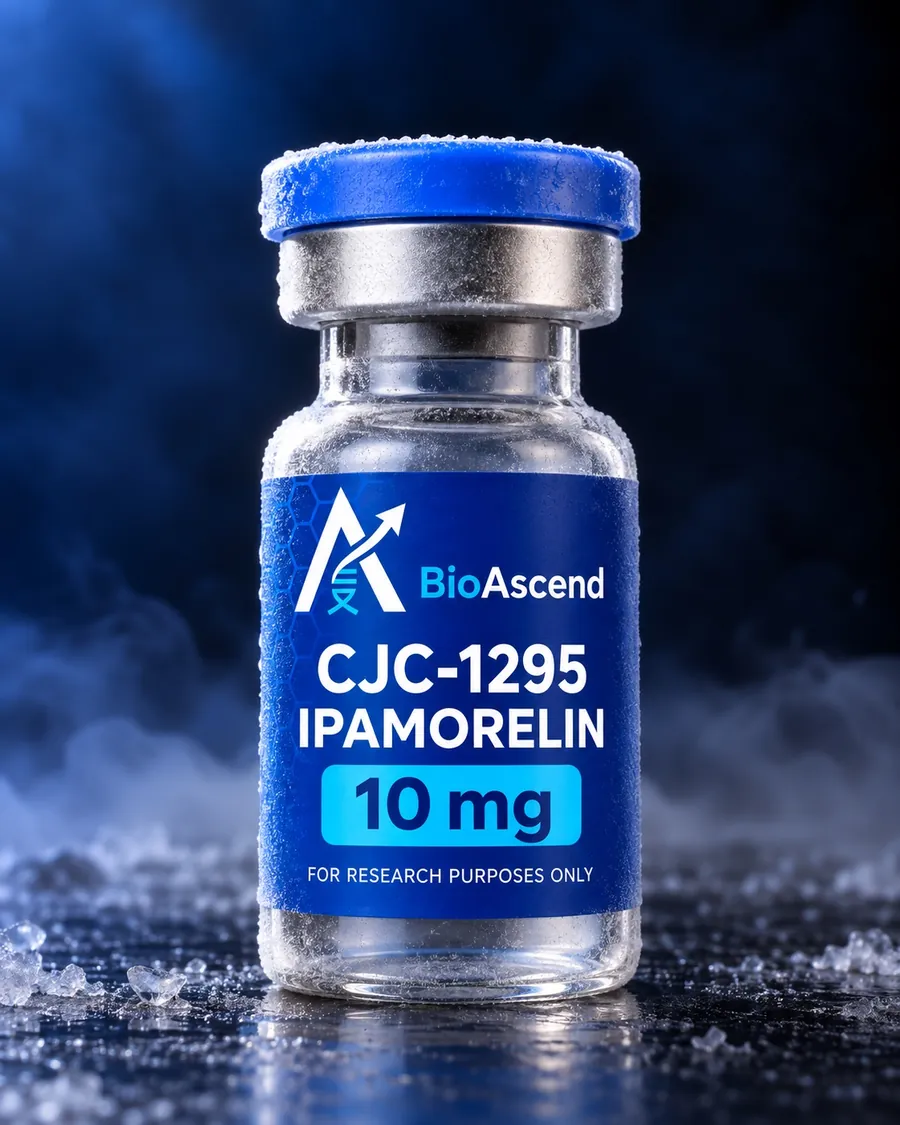
| Examples | BPC-157 + TB-500, CJC-1295 + Ipamorelin, KLOW | Metabolic Research Bundle, Renewal Research Bundle |
Why combine compounds?
The logic behind most blends is complementary pathways: two compounds that influence the same biological process through different mechanisms. Studying them together lets a researcher look at whether those pathways interact, add together or overlap.
Common blends and the reasoning behind them
BPC-157 + TB-500
BPC-157 is studied for its effects on angiogenesis, nitric oxide and growth-factor signalling. TB-500 (thymosin beta-4) regulates actin and cell migration. Together, they cover the vascular and cell-movement sides of tissue-repair research. Our BPC-157 + TB-500 10mg contains 5mg of each. For a deeper look, read BPC-157 vs TB-500.
CJC-1295 (no DAC) + Ipamorelin
Growth hormone release is driven by two stimulatory signals: GHRH and ghrelin. CJC-1295 without DAC mimics GHRH, and ipamorelin acts on the ghrelin receptor (GHS-R1a). Combining them lets researchers study how the two signals shape GH pulses together. Our CJC-1295 + Ipamorelin blend contains 5mg of each. See CJC-1295 with vs without DAC for why the no-DAC form is used.
KLOW
KLOW extends the BPC-157 + TB-500 pairing with two more compounds: GHK-Cu (50mg), studied for collagen and extracellular-matrix synthesis, and KPV (10mg), studied in inflammatory signalling. It covers four pathways in one 80mg vial. Published research on the four-peptide combination itself is limited, so it's mainly of interest for studying how these pathways interact.
The trade-offs
- Fixed ratio. You can't adjust one compound without changing the other. If an experiment needs independent control of each, separate vials are the better choice.
- Shared conditions. Every component is reconstituted in the same diluent and stored the same way, so the blend has to suit all of them.
- Different testing reports. For multi-peptide blends, labs often report identity and amount for each component rather than one overall purity figure. Our KLOW report, for example, lists the measured amount of each of its four peptides. Our guide on how to read a COA explains this.
- Harder to attribute results. When two compounds are present, separating which one caused an observed effect needs careful experimental design, often with single-compound controls.
Blend or separate vials?
A blend suits you when the combination itself is what you're studying, the standard ratio fits your protocol, and convenience matters.
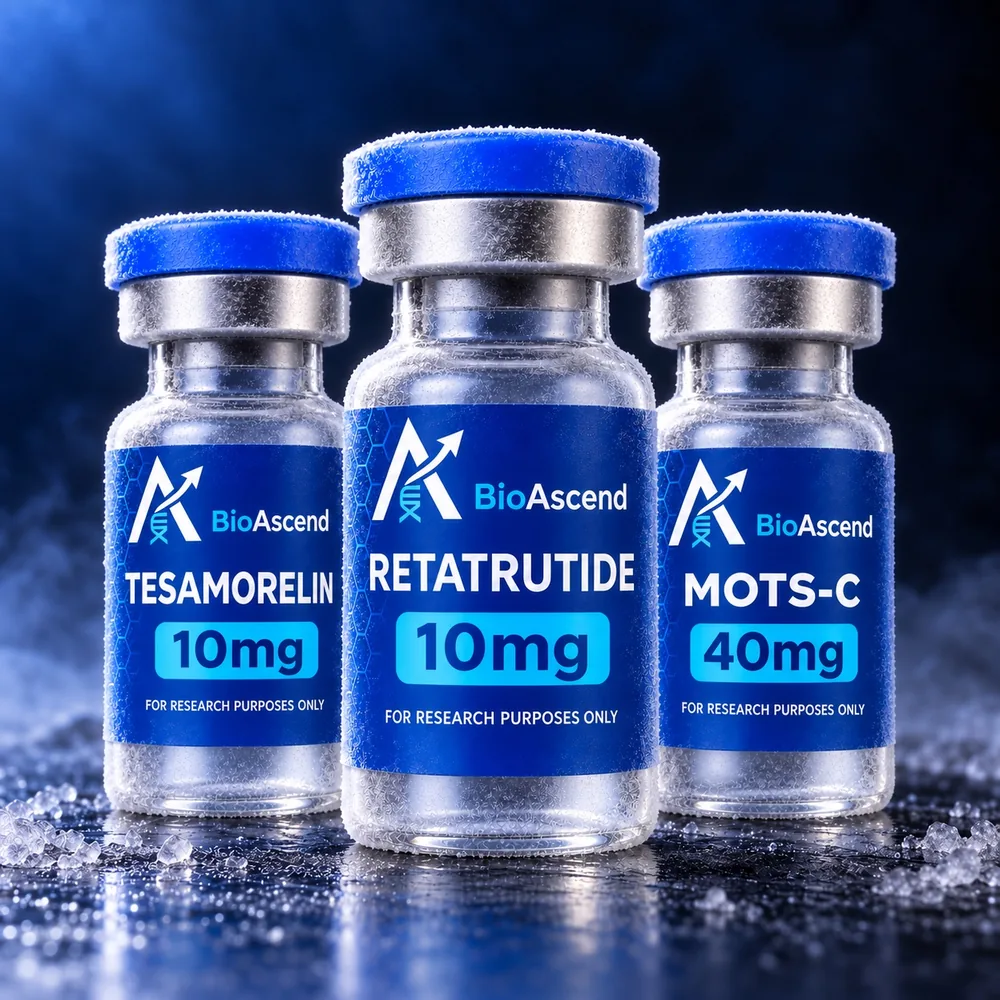
Separate vials suit you when you need to vary amounts independently, run single-compound controls, or store and prepare each compound differently. Our Metabolic Research Bundle (Retatrutide, Tesamorelin, MOTS-C) and Renewal Research Bundle (GHK-Cu, KPV, Glutathione) give you related compounds in separate vials.
Frequently asked questions
What is a peptide blend?
A peptide blend is two or more peptides combined in a single vial at a fixed ratio, so they're reconstituted and handled together as one solution.
What is the difference between a peptide blend and a bundle?
A blend contains several compounds in one vial at a fixed ratio. A bundle is several separate vials sold together, so each compound can be prepared and used independently.
Why do blend COAs not always show a purity percentage?
With several peptides in one vial, labs often confirm the identity of each component and measure how much of each is present, rather than reporting a single purity figure for the mixture.
What is in KLOW?
Each 80mg KLOW vial contains GHK-Cu 50mg, BPC-157 10mg, TB-500 10mg and KPV 10mg.