Key takeaways
- Retatrutide (LY3437943) is a 39-amino-acid peptide from Eli Lilly that activates the GIP, GLP-1 and glucagon receptors.
- A fatty-acid side chain binds albumin, giving it a long half-life.
- It is investigational: phase 3 TRIUMPH results were announced in 2026, but it is not approved by Health Canada, the FDA or any other regulator.
In this guide
- Compound overview
- How it's built
- The three receptors
- Clinical development
- Research areas
- Handling notes
- FAQ
Compound overview
| Property | Detail |
|---|---|
| Development code | LY3437943 |
| Developer | Eli Lilly and Company |
| Type | Triple agonist: GIP, GLP-1 and glucagon receptors |
| Length | 39 amino acids, with a fatty diacid side chain |
| CAS number | 2381089-83-2 |
| Molecular formula | C221H342N46O68 |
| Molecular weight | 4,731.33 g/mol |
| Status | Investigational (phase 3) |
How retatrutide is built
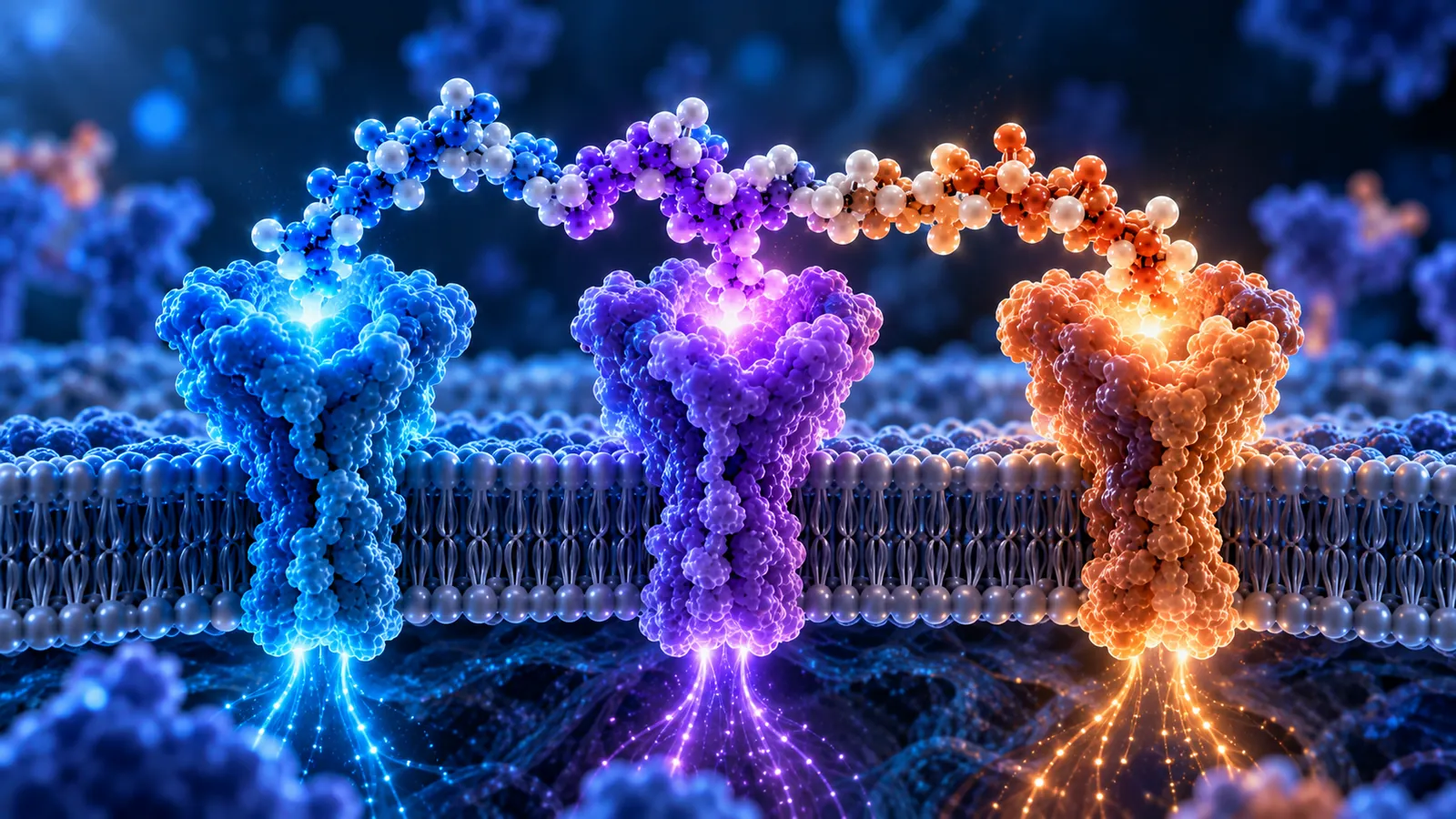
Retatrutide is a synthetic peptide engineered so that one molecule can bind and activate three related receptors. GIP, GLP-1 and glucagon are all part of the same family of peptide hormones, with similar receptor structures, which is what makes a single "multi-agonist" molecule possible.
Its sequence carries a fatty diacid side chain attached through a linker. This binds albumin in the blood, which protects the peptide from rapid breakdown and kidney clearance. The result is a long half-life that supported once-weekly administration in clinical studies.
What each receptor contributes
GLP-1 receptor
GLP-1 is an incretin hormone released from the gut after eating. Its receptor is involved in insulin secretion, appetite signalling and slowing gastric emptying. It's the single target of semaglutide.
GIP receptor
GIP is the other major incretin. It also stimulates insulin release after meals, and its receptor is found in pancreatic and fat tissue. In retatrutide's discovery study, activity at the GIP receptor was comparatively the strongest of the three.
Glucagon receptor
Glucagon raises glucose output from the liver, but its receptor is also linked to energy expenditure and liver fat metabolism. Adding glucagon activity is what distinguishes retatrutide from dual agonists like tirzepatide. The incretin activity is thought to offset glucagon's glucose-raising effect.
Clinical development
Retatrutide was first characterised by Coskun and colleagues, who described its pharmacology at all three receptors in preclinical models and early clinical testing (Cell Metabolism, 2022). Two phase 2 trials were published in 2023: one in adults with obesity (Jastreboff et al., New England Journal of Medicine) and one in people with type 2 diabetes (Rosenstock et al., The Lancet).
The phase 3 TRIUMPH program is studying retatrutide in obesity, type 2 diabetes and related conditions, and Eli Lilly announced topline results from the first trials in 2026. Until regulators complete their review, retatrutide remains an investigational compound.
Key research areas
- GLP-1, GIP and glucagon receptor pharmacology
- Appetite signalling and food-intake regulation
- Glucose regulation and insulin secretion
- Energy expenditure and lipid metabolism
- Liver fat and cardiometabolic markers
- Comparisons with single and dual incretin agonists
For comparisons with approved compounds, see retatrutide vs Ozempic and retatrutide vs tirzepatide vs semaglutide.
Handling notes
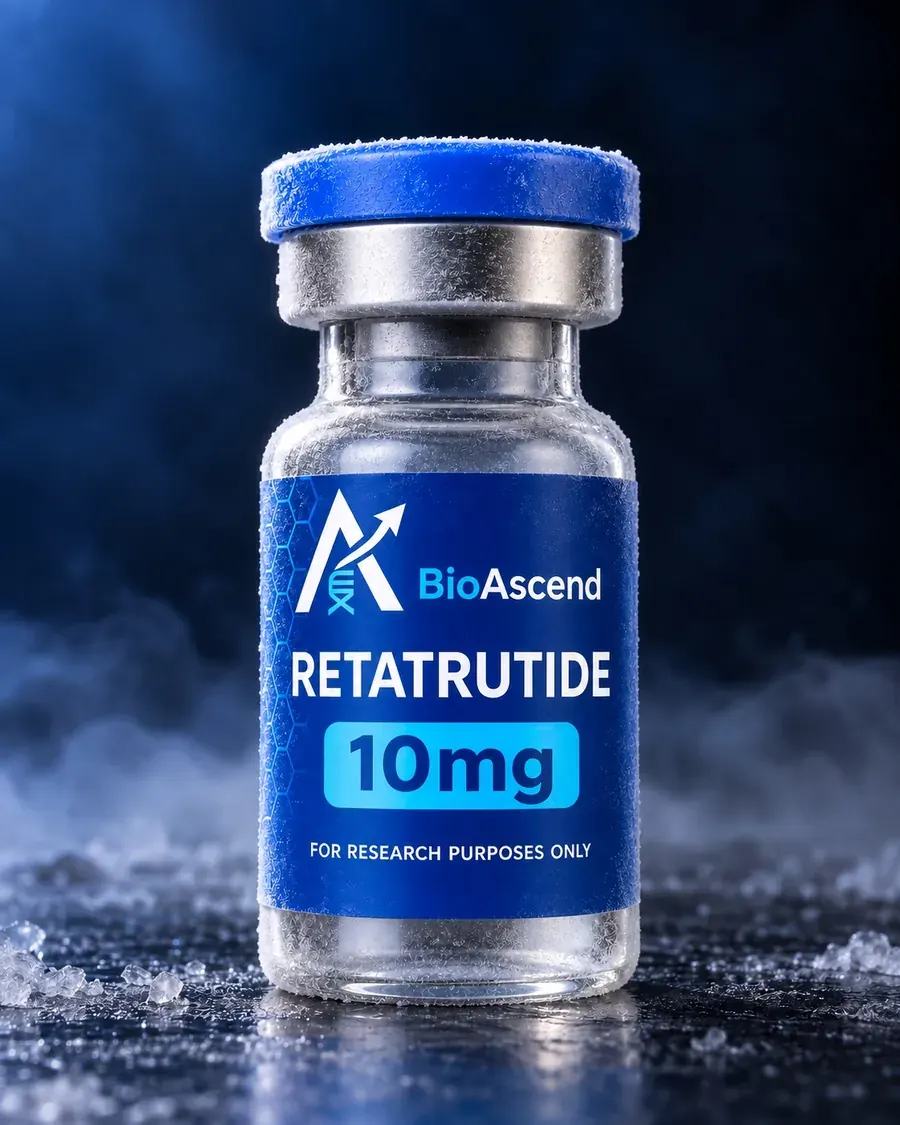
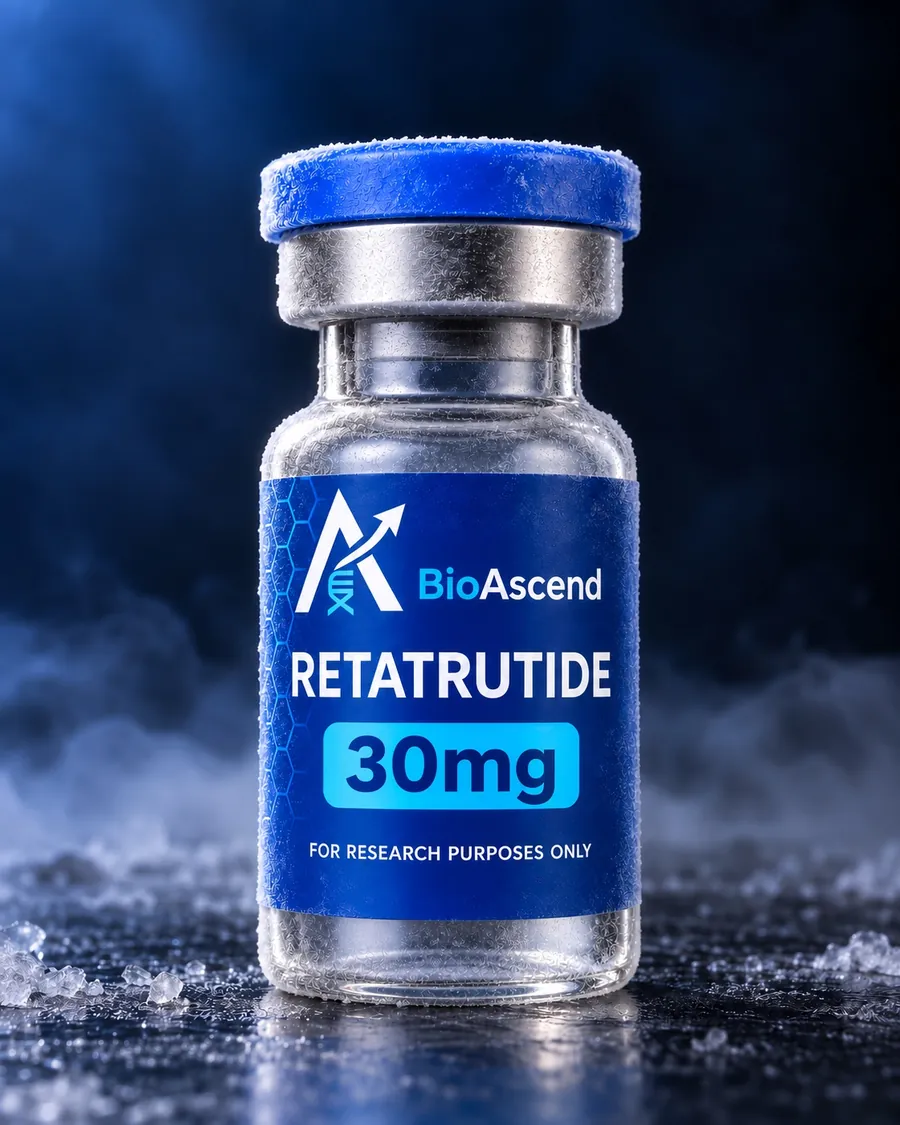
Research-grade retatrutide is supplied as a lyophilized powder, in 10mg and 30mg vials. Store sealed vials cold, dry and away from light, and refrigerate at 2–8°C after reconstitution. Our guides on storage and reconstitution cover the details, and the COA guide uses our retatrutide report as its worked example.
Frequently asked questions
What is retatrutide?
Retatrutide (LY3437943) is an investigational peptide developed by Eli Lilly that activates three hormone receptors: GIP, GLP-1 and glucagon. It's often called a triple agonist.
Why is retatrutide called a triple agonist?
Because a single retatrutide molecule activates three receptors: the GIP, GLP-1 and glucagon receptors.
Is retatrutide approved?
No. Phase 3 results were announced in 2026, but retatrutide has not been approved by Health Canada, the FDA or any other regulator.
What is the molecular weight of retatrutide?
Retatrutide has a molecular weight of 4,731.33 g/mol and the molecular formula C221H342N46O68.
References
- Coskun T, et al. LY3437943, a novel triple glucagon, GIP, and GLP-1 receptor agonist for glycemic control and weight loss. Cell Metab. 2022;34(9):1234–1247.
- Jastreboff AM, et al. Triple-hormone-receptor agonist retatrutide for obesity — a phase 2 trial. N Engl J Med. 2023;389(6):514–526.
- Rosenstock J, et al. Retatrutide, a GIP, GLP-1 and glucagon receptor agonist, for people with type 2 diabetes: a phase 2 trial. Lancet. 2023.