Key takeaways
- Let the vial reach room temperature first, and work aseptically throughout.
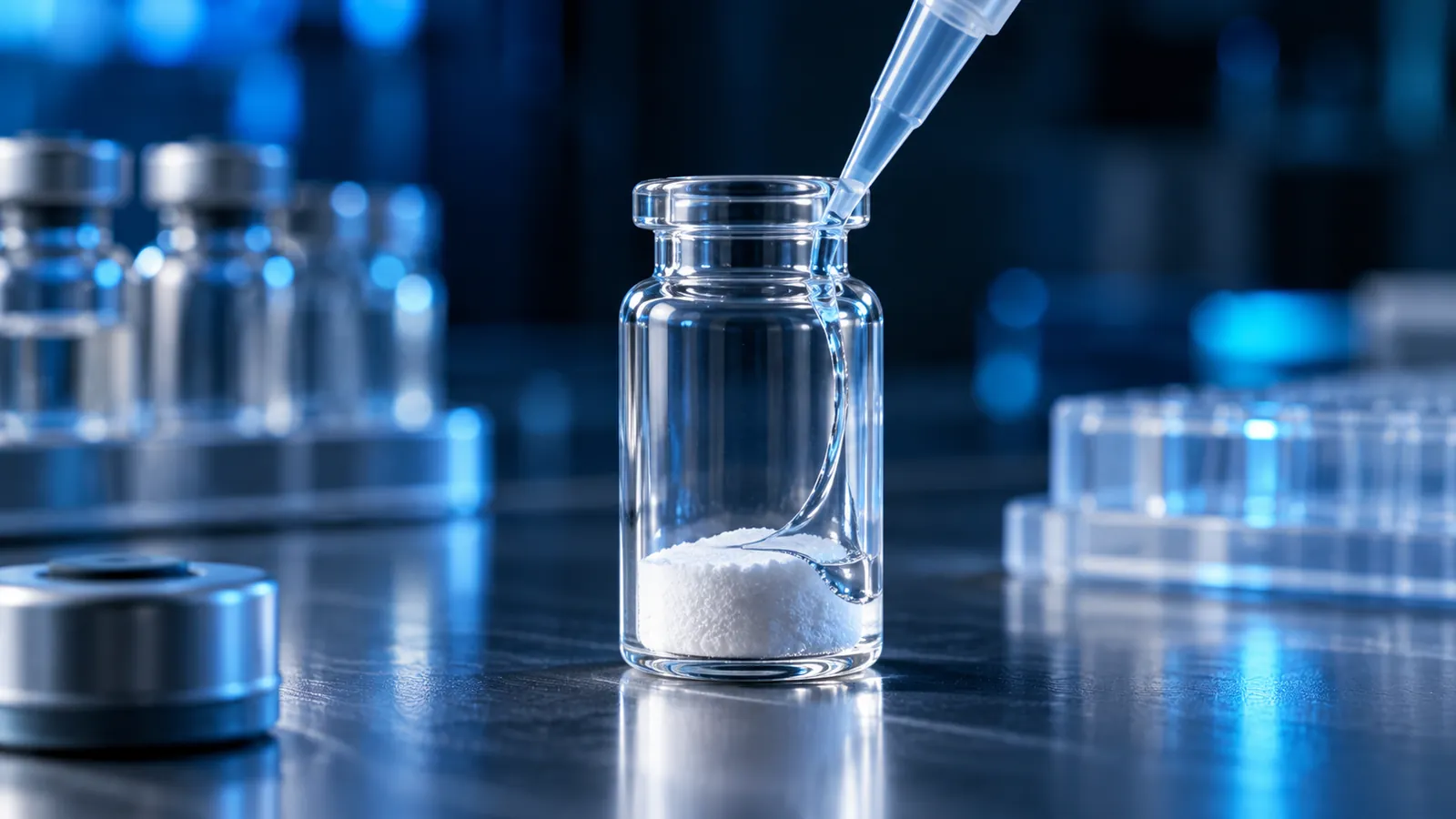
- Add the diluent slowly down the side of the vial, never sprayed directly onto the powder.
- Swirl gently, don't shake. Then label the vial and refrigerate it at 2–8°C.
In this guide
- What reconstitution means
- What you'll need
- Step-by-step method
- Working out concentration
- Troubleshooting
- FAQ
What reconstitution means
Lyophilization (freeze-drying) removes the water from a peptide so it stays stable during shipping and storage. Reconstitution is the reverse: dissolving that dry powder, often called the "cake", in a suitable liquid (the diluent) to make a solution of known concentration for an experiment.
Because a dissolved peptide is far less stable than a dry one, it's best to reconstitute only when the material is needed, and to store the solution properly afterwards. Our guide on how to store research peptides covers that side in detail.
What you'll need
- The peptide vial, sealed and at room temperature.
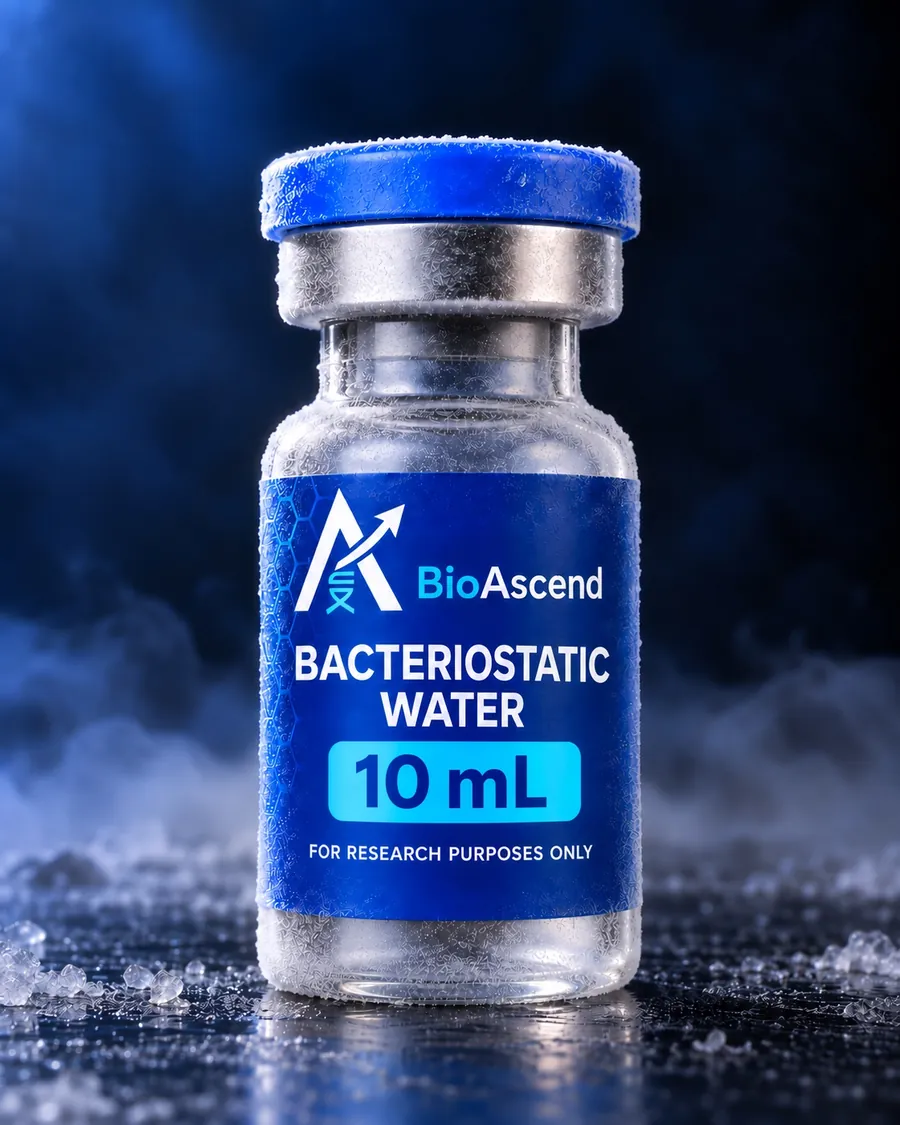
- A suitable diluent. Bacteriostatic water (sterile water with 0.9% benzyl alcohol) is the most common choice for vials that will be accessed more than once. Sterile water suits single-use preparations. See bacteriostatic water vs sterile water for the differences.
- Sterile transfer equipment, such as a sterile syringe and needle or a sterile pipette, depending on your lab's protocol.
- Alcohol swabs (70% isopropyl alcohol) for the vial stoppers.
- A clean work surface, ideally a laminar flow hood or biosafety cabinet, and gloves.
- A marker or labels to record what you've made.
Step-by-step method
- Bring the vial to room temperature. If it was refrigerated or frozen, leave it sealed for 15–30 minutes so condensation doesn't form on the powder when it's opened.
- Check the vial. Confirm the compound and amount on the label. A small pellet or thin film of powder is normal.
- Disinfect both stoppers. Wipe the rubber stopper of the peptide vial and the diluent vial with an alcohol swab and let them air-dry.
- Draw up the diluent using sterile technique, measuring the volume your protocol calls for.
- Add it slowly down the inside wall of the vial. Angle the needle or pipette so the liquid runs down the glass rather than jetting onto the powder. A forceful stream can foam the solution and damage fragile peptides.
- Swirl gently or roll the vial between your fingers until the powder dissolves. Don't shake it. Shaking introduces air and can cause aggregation.
- Let it stand for a few minutes if needed. The finished solution should be clear and free of particles.
- Label and store. Write the compound, concentration, diluent and date on the vial, then refrigerate at 2–8°C, protected from light.
Working out concentration
The concentration of the solution depends only on how much peptide is in the vial and how much diluent you add:
Concentration (mg/mL) = peptide amount (mg) ÷ diluent volume (mL)
For example, 10 mg of peptide dissolved in 2 mL of diluent gives a 5 mg/mL solution.
Choose the volume based on the concentration your assay or protocol requires. Remember that the actual amount in the vial can differ slightly from the label. The certificate of analysis shows the measured content for the tested batch.
Troubleshooting
The powder won't fully dissolve
Give it more time and keep swirling gently. Some peptides, particularly hydrophobic ones, dissolve slowly in water. Check the compound's solubility information; some protocols call for a different solvent for specific peptides.
The solution is cloudy or has particles
Cloudiness that doesn't clear can mean incomplete dissolution, aggregation or contamination. Don't use a solution that stays cloudy when it should be clear.
The solution foamed
Foaming usually comes from adding diluent too fast or shaking. Let the vial stand until the foam settles, and next time add the liquid more slowly down the wall.
The vial looked empty before reconstitution
Lyophilized peptide often forms a film or tiny pellet that's easy to miss, especially in low-milligram vials. It will dissolve normally.
Frequently asked questions
What is the best liquid to reconstitute peptides with?
Bacteriostatic water is the most common choice for vials that will be accessed more than once, because its benzyl alcohol preservative inhibits bacterial growth. Sterile water suits single-use preparations. Some peptides need a different solvent, so check compound-specific guidance.
Should I shake a peptide vial to dissolve it?
No. Swirl or roll the vial gently instead. Shaking introduces air and can cause peptides to aggregate or degrade.
How do I calculate the concentration of a reconstituted peptide?
Divide the amount of peptide in milligrams by the volume of diluent in millilitres. For example, 10 mg in 2 mL gives 5 mg/mL.
How should a reconstituted peptide be stored?
Refrigerate it at 2–8°C, protect it from light, label it with the date and concentration, and avoid repeated freezing and thawing.