In Stock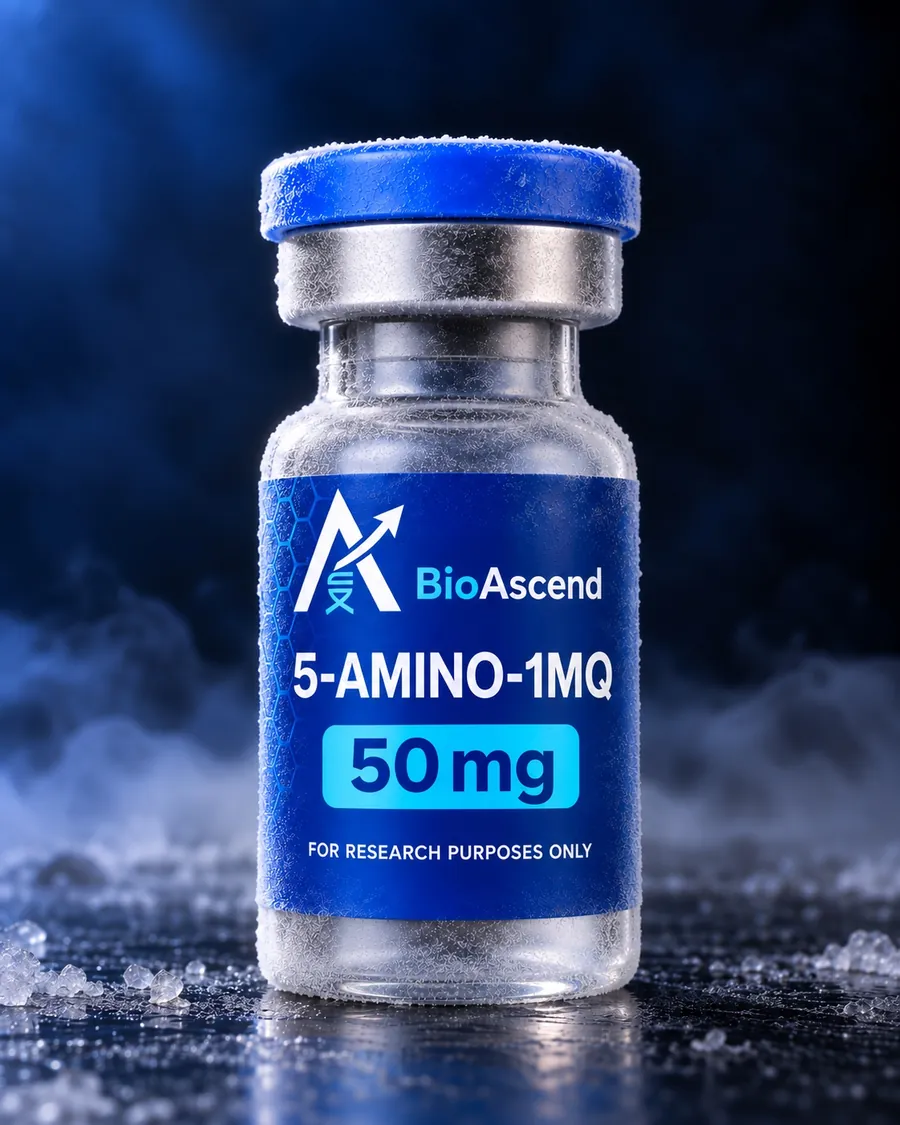
5-Amino-1MQ
50 mg
Orders placed before 2 p.m. ET ship the same business day. Free shipping on orders $250+.
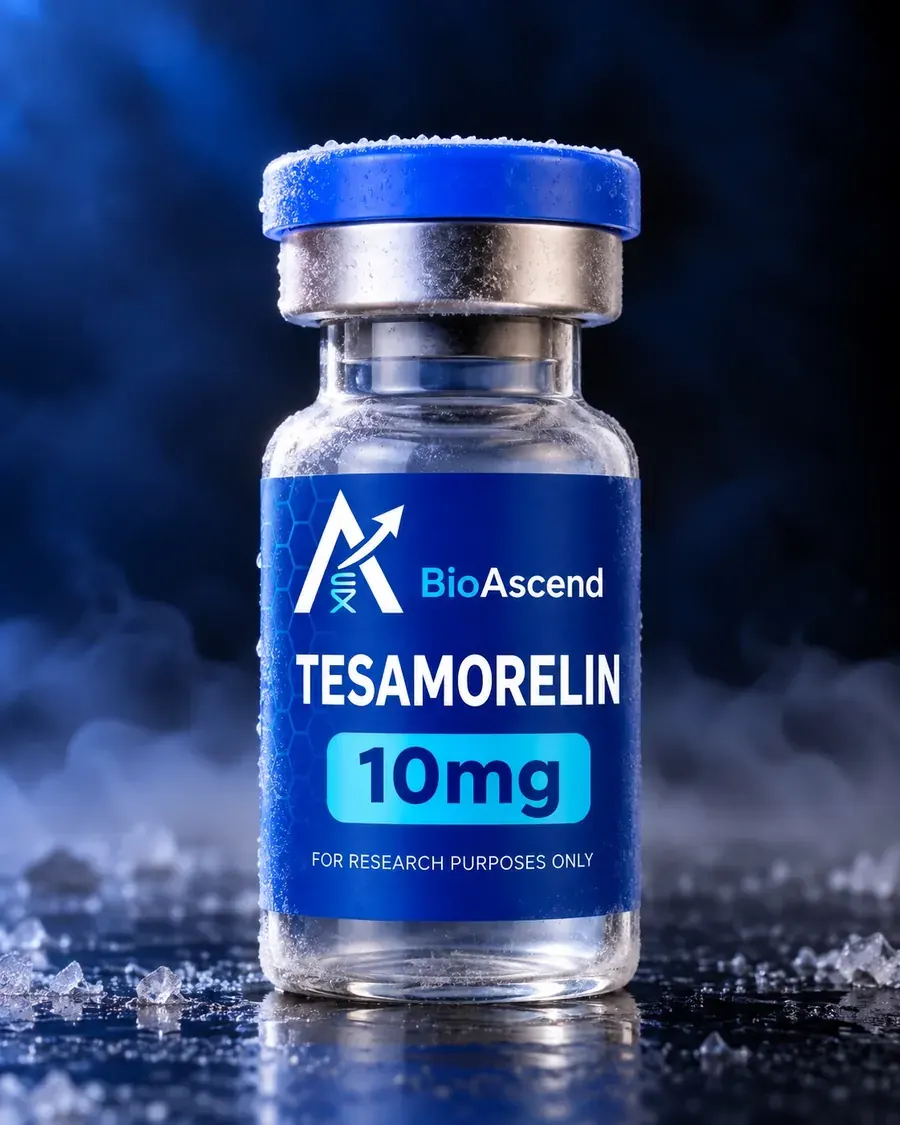
Tesamorelin is a synthetic analogue of growth hormone-releasing hormone (GHRH), supplied as a 10mg lyophilized research peptide. It is studied for its action on the growth hormone and IGF-1 axis and for its effects on visceral adipose tissue and body composition.
Tesamorelin is a synthetic peptide made of all 44 amino acids of human growth hormone-releasing hormone (GHRH), with a trans-3-hexenoyl group added to its N-terminus. That modification makes the peptide more resistant to enzymatic breakdown than native GHRH while keeping its activity at the GHRH receptor.
The compound was developed by Theratechnologies, a Montreal-based company, and is one of the best-studied GHRH analogues in the scientific literature. Under the name Egrifta, it was approved in 2010 for a specific clinical indication; the product supplied here is a research-grade compound for laboratory use only.
GHRH is produced in the hypothalamus and acts on GHRH receptors in the anterior pituitary, prompting pulsatile release of growth hormone. Growth hormone in turn stimulates production of insulin-like growth factor 1 (IGF-1), largely in the liver.
Because tesamorelin works upstream at the GHRH receptor rather than acting directly on growth hormone receptors, it preserves the pituitary's own regulatory feedback. That makes it useful for studying the relationship between endogenous growth hormone secretion, IGF-1 signalling and fat metabolism.
Tesamorelin is best known for research on visceral adipose tissue, the deep abdominal fat around internal organs. A randomized trial in patients with HIV-associated abdominal fat accumulation reported reductions in visceral fat alongside changes in lipid and IGF-1 levels (Falutz et al., New England Journal of Medicine, 2007), and a pooled analysis of two phase 3 trials, including safety extension data, examined those effects in a larger population (Falutz et al., Journal of Clinical Endocrinology & Metabolism, 2010).
Later clinical research has also examined tesamorelin in relation to liver fat and body composition. That clinical literature is cited here for scientific context only and makes no claim about this research product.
Both are GHRH analogues. Tesamorelin keeps the full 44-amino-acid GHRH sequence with an N-terminal trans-3-hexenoyl group, while CJC-1295 (no DAC), also called Mod GRF 1-29, is based on the first 29 amino acids of GHRH with four amino-acid substitutions.
Tesamorelin is available as a 10mg lyophilized powder vial, shipped from Canada.
Store unopened vials in a cool, dry place away from direct light, with refrigeration recommended for long-term storage. After reconstitution, keep the vial refrigerated at 2–8°C.
Published literature is summarised for scientific context only. It is not a claim about this product, and this product is not for human or veterinary use.
Store unopened vials in a cool, dry environment away from direct light. For long-term storage, refrigeration is recommended. After reconstitution, keep refrigerated at 2–8°C and protect from direct light.
Not for human consumption. This product is sold exclusively as a research compound for in vitro and laboratory use by qualified researchers. It is not a drug, supplement, or cosmetic, is not intended for human or veterinary use, and is not intended to diagnose, treat, cure, or prevent any disease. No dosing, administration, or therapeutic claims are made or implied.
Published literature referenced on this page is provided for scientific context only and does not constitute a claim about this product or evidence of safety or efficacy in any organism.
By purchasing this product, you confirm that it will be used for legitimate research purposes in accordance with applicable laws and regulations.