Key takeaways
- Bacteriostatic water contains 0.9% benzyl alcohol, which inhibits bacterial growth, so a vial can be accessed multiple times.
- Sterile water has no preservative. Once opened, it's generally meant for a single use.
- Some compounds are incompatible with benzyl alcohol, so the right choice depends on the compound and the protocol.
In this guide
- Side by side
- What is bacteriostatic water?
- What is sterile water?
- Which one to use
- Handling tips
- FAQ
Side by side
| Bacteriostatic water | Sterile water | |
|---|---|---|
| Composition | Sterile water + 0.9% benzyl alcohol | Sterile water only |
| Preservative | Yes (benzyl alcohol) | No |
| Vial use | Can be accessed multiple times | Generally single use once opened |
| Best for | Peptide vials drawn from repeatedly over time | Single-use preparations and benzyl-alcohol-sensitive compounds |
| Storage (unopened) | 20–25°C, away from light | Per manufacturer, typically room temperature |
What is bacteriostatic water?
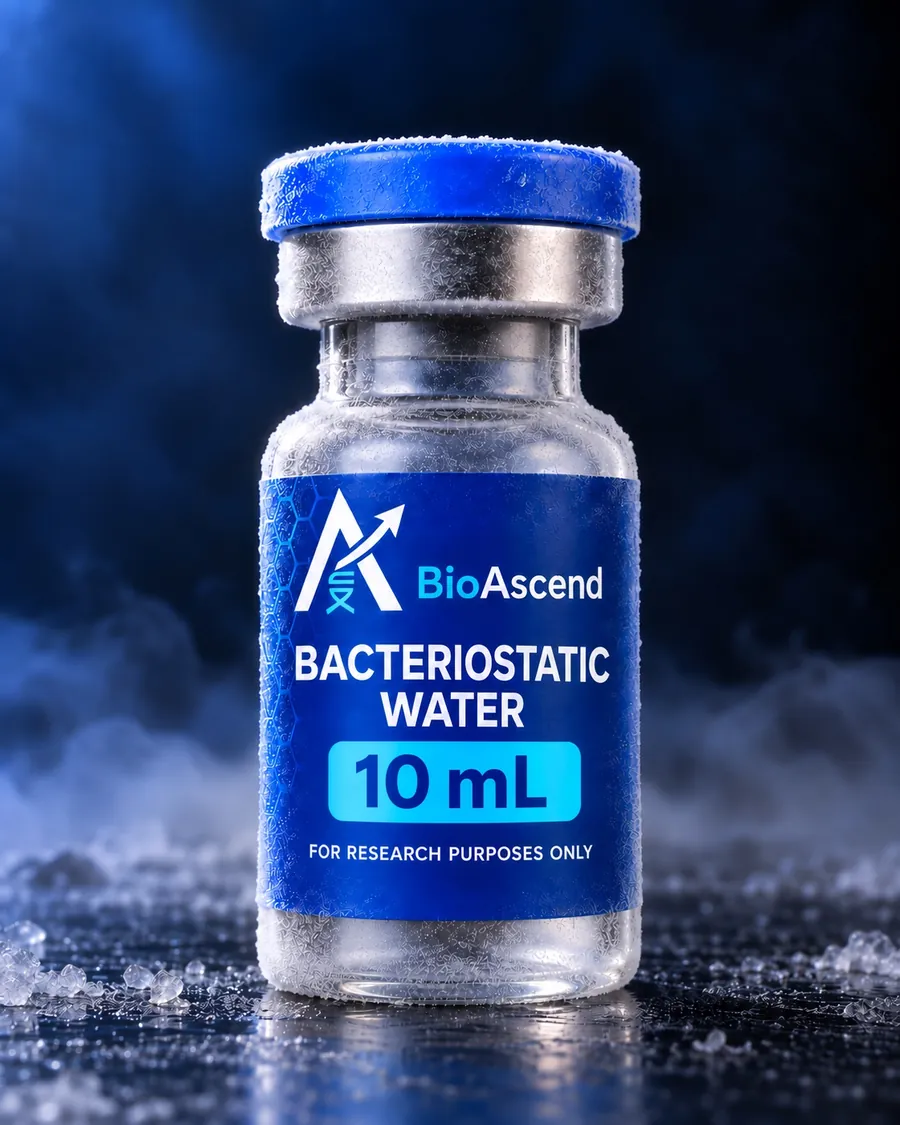
Bacteriostatic water is sterile, non-pyrogenic water with 0.9% benzyl alcohol added as a preservative. "Bacteriostatic" means it inhibits bacterial growth rather than killing bacteria outright.
That matters every time a needle passes through the vial's rubber stopper: a small number of bacteria could be carried in. In plain sterile water, they could multiply. In bacteriostatic water, the benzyl alcohol keeps them from growing, which is why a single vial can be accessed repeatedly over a longer period.
What is sterile water?
Sterile water is water that has been purified and sterilized, with nothing added. Without a preservative, there's nothing to stop contamination once the seal is broken, so an opened vial is generally intended for a single use and the remainder discarded.
Sterile water is not the same as distilled or tap water. Distilled water is purified but not sterile, and tap water is neither. Neither is appropriate for reconstituting research peptides.
Which one should you use?
Choose bacteriostatic water when a reconstituted peptide will be drawn from more than once over days or weeks. This is the most common situation in peptide research, which is why bacteriostatic water is the default diluent for most lyophilized peptides.
Choose sterile water when the whole vial will be used in one go, or when the compound or experiment is sensitive to benzyl alcohol. Some peptides and some cell-based assays are affected by preservatives, so check compound-specific guidance and your protocol.
Whichever you use, the reconstitution technique is the same. Our step-by-step guide on how to reconstitute lyophilized peptides walks through it.
Handling tips
- Wipe the stopper with an alcohol swab before every entry.
- Use sterile equipment every time, and never reuse a needle or pipette tip between vials.
- Don't use a vial that looks cloudy, has particles, or has a damaged seal.
- Label opened vials with the date they were first accessed.
Frequently asked questions
What is the difference between bacteriostatic water and sterile water?
Bacteriostatic water contains 0.9% benzyl alcohol as a preservative, which inhibits bacterial growth and allows a vial to be accessed more than once. Sterile water contains no preservative and is generally meant for single use once opened.
Can I use sterile water instead of bacteriostatic water for peptides?
Yes, for single-use preparations or compounds that are incompatible with benzyl alcohol. For vials that will be accessed repeatedly, bacteriostatic water is usually preferred because of its preservative.
Can I use distilled water to reconstitute peptides?
No. Distilled water is purified but not sterile. Research peptides should be reconstituted with a sterile diluent such as bacteriostatic water or sterile water.
How should bacteriostatic water be stored?
Store unopened bacteriostatic water at controlled room temperature, 20–25°C, tightly closed and away from excessive heat and direct light.