In Stock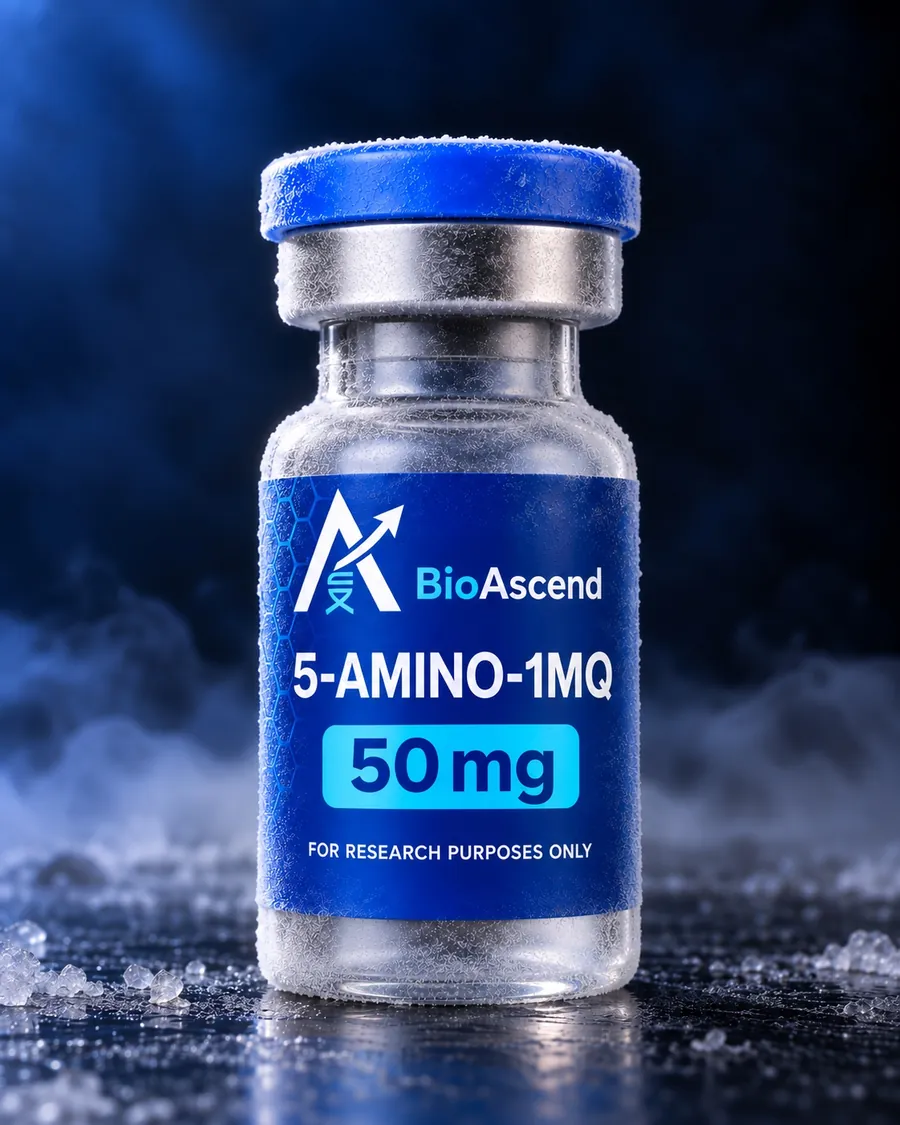
5-Amino-1MQ
50 mg
Orders placed before 2 p.m. ET ship the same business day. Free shipping on orders $250+.
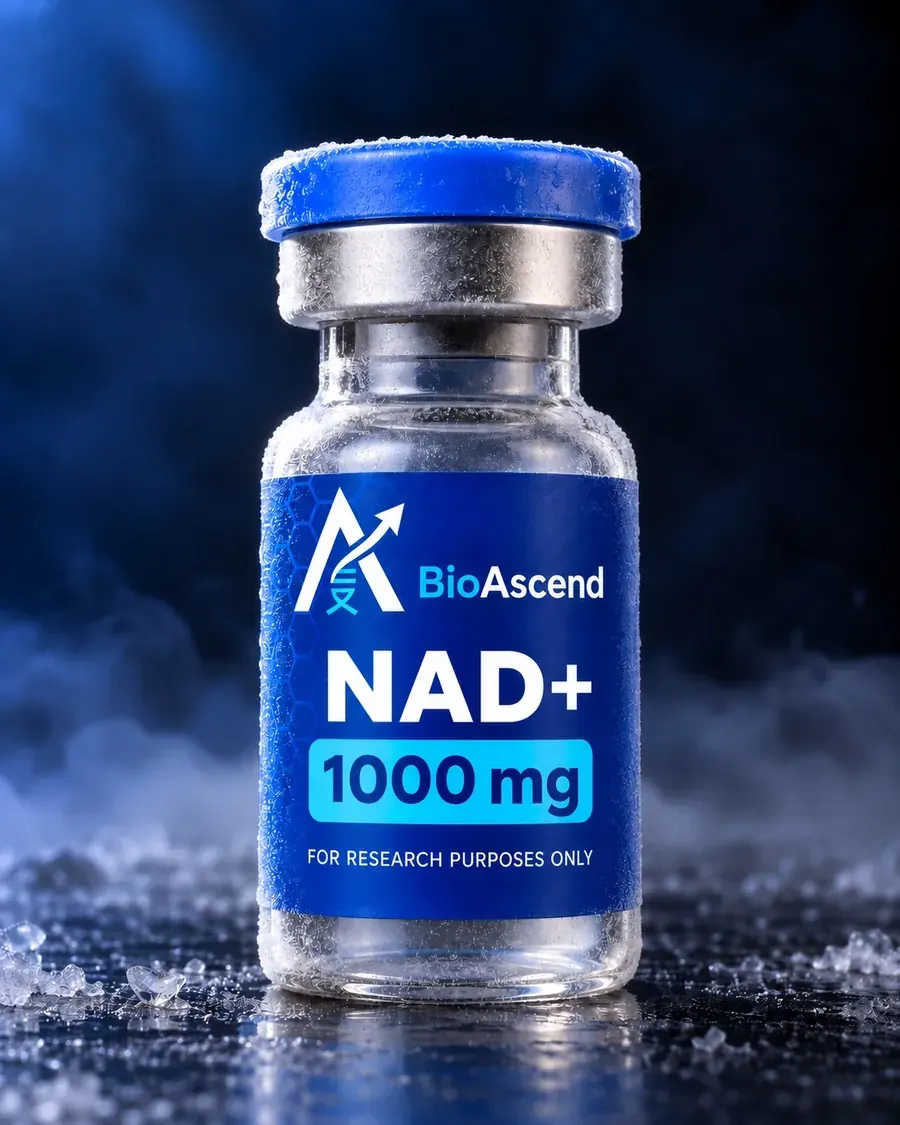
NAD+ (nicotinamide adenine dinucleotide) is a coenzyme found in every living cell, supplied as a 1000mg lyophilized research compound. It is studied for its central role in cellular energy production, mitochondrial function, DNA repair and the biology of ageing.
Nicotinamide adenine dinucleotide (NAD) is a dinucleotide coenzyme made of two nucleotides joined through their phosphate groups. It exists in an oxidised form, NAD+, and a reduced form, NADH, and the cycling between the two is fundamental to how cells extract energy from nutrients.
Cells make NAD+ from dietary precursors and recycle it through the salvage pathway. Research has found that NAD+ levels decline in several tissues with age, which has made NAD+ and its precursors a major focus of ageing research.
As an electron carrier, NAD+ accepts electrons during glycolysis, the citric acid cycle and fatty-acid oxidation, and NADH delivers them to the mitochondrial electron transport chain to drive ATP production.
NAD+ is also consumed as a substrate by several enzyme families. Sirtuins use it to remove acetyl groups from proteins involved in metabolism and stress responses, PARP enzymes use it during DNA repair, and CD38 and related enzymes break it down in signalling pathways. This dual role, as a recycled cofactor and as a consumed substrate, links cellular energy status to gene regulation and genome maintenance.
Reviews of the field describe how NAD+ availability affects metabolism, DNA repair, inflammation and cellular senescence, and how its decline may contribute to age-related processes (Covarrubias et al., Nature Reviews Molecular Cell Biology, 2021).
Preclinical studies have tested whether raising NAD+ through precursors can influence metabolic and age-related outcomes in animal models (Rajman, Chwalek and Sinclair, Cell Metabolism, 2018). These findings are cited for scientific context only.
NAD+ is the oxidised form of the coenzyme and NADH is the reduced form. NAD+ accepts electrons during metabolism and becomes NADH, which then donates those electrons to the mitochondrial electron transport chain.
NAD+ is available as a 1000mg lyophilized powder vial, shipped from Canada.
Store unopened vials in a cool, dry place away from direct light, with refrigeration recommended for long-term storage. After reconstitution, keep the vial refrigerated at 2–8°C and protected from light.
Published literature is summarised for scientific context only. It is not a claim about this product, and this product is not for human or veterinary use.
Store unopened vials in a cool, dry environment away from direct light. For long-term storage, refrigeration is recommended. After reconstitution, keep refrigerated at 2–8°C and protect from direct light.
Not for human consumption. This product is sold exclusively as a research compound for in vitro and laboratory use by qualified researchers. It is not a drug, supplement, or cosmetic, is not intended for human or veterinary use, and is not intended to diagnose, treat, cure, or prevent any disease. No dosing, administration, or therapeutic claims are made or implied.
Published literature referenced on this page is provided for scientific context only and does not constitute a claim about this product or evidence of safety or efficacy in any organism.
By purchasing this product, you confirm that it will be used for legitimate research purposes in accordance with applicable laws and regulations.