Key takeaways
- GHK is a naturally occurring tripeptide (glycine–histidine–lysine). Bound to copper, it's called GHK-Cu.
- It was first isolated from human plasma in 1973, and plasma levels have been reported to decline with age.
- Research focuses on collagen and extracellular-matrix remodelling, wound repair, skin and hair-follicle biology, and gene expression.
In this guide
- What is GHK-Cu?
- GHK vs GHK-Cu
- How it's thought to work
- Research areas
- Skin research
- Cosmetic vs research grade
- Handling notes
- FAQ
What is GHK-Cu?
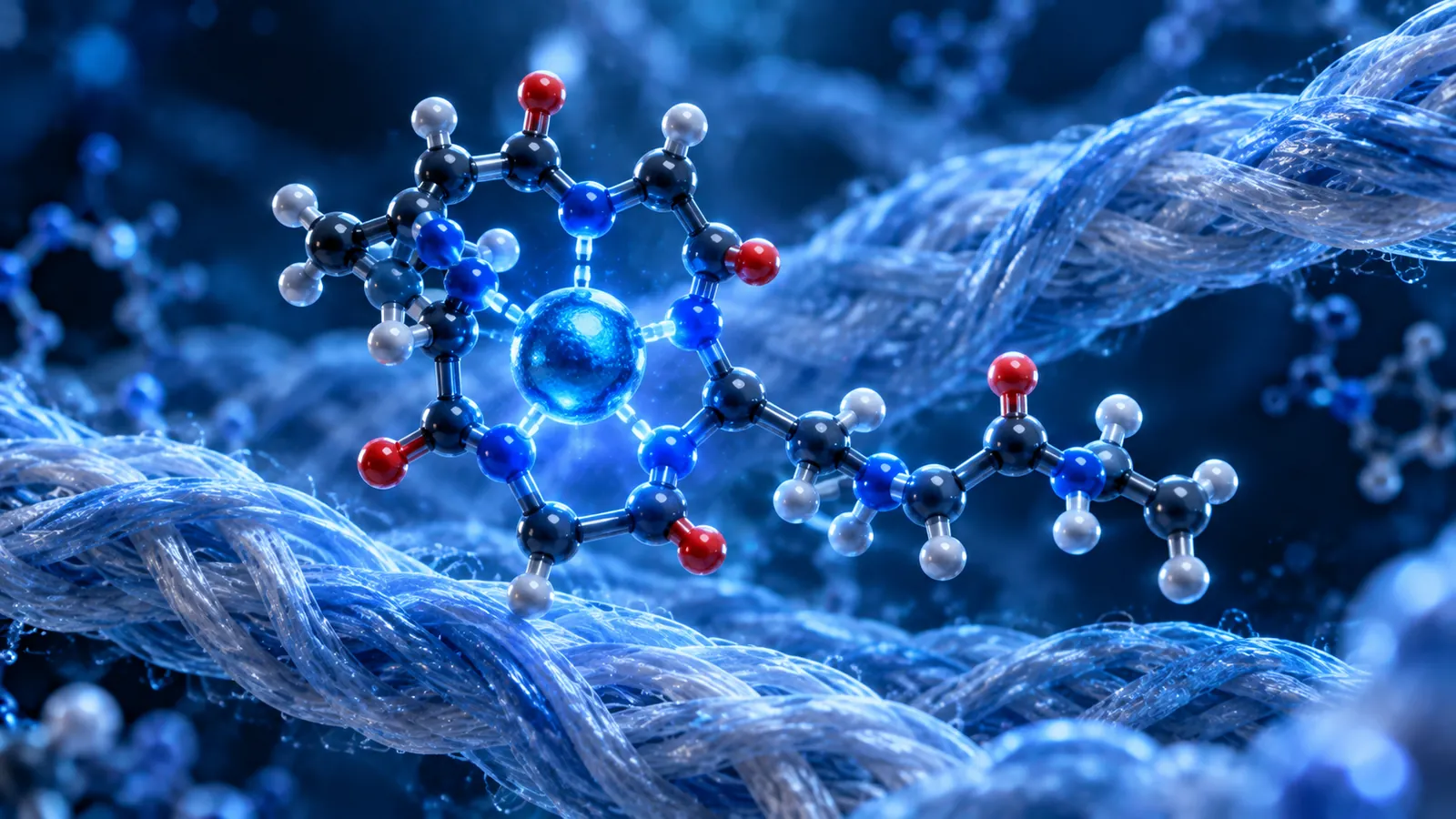
GHK is a tripeptide made of three amino acids: glycine, histidine and lysine (glycyl-L-histidyl-L-lysine). It has a strong affinity for copper(II) ions, and the resulting complex is known as GHK-Cu, or simply "copper peptide".
It was first isolated from human plasma by Loren Pickart in 1973 and has since been found in saliva and urine. Plasma GHK levels have been reported to fall with age, which is one reason it became a long-standing subject of research into tissue repair and skin biology.
Why is it blue? The copper gives GHK-Cu its characteristic blue colour, both as a powder and in solution. That colour is normal and expected for this compound.
GHK vs GHK-Cu
GHK is the peptide on its own. GHK-Cu is the same peptide bound to a copper ion. The copper complex is the form most studied for tissue remodelling, since delivering copper to cells is thought to be part of how it works.
How GHK-Cu is thought to work
Copper delivery
Copper is a cofactor for enzymes involved in collagen cross-linking (such as lysyl oxidase) and antioxidant defence (such as superoxide dismutase). GHK-Cu is thought to act partly by delivering copper to cells in a form they can use.
Extracellular-matrix remodelling
In research models, GHK-Cu has been associated with increased synthesis of collagen, elastin and glycosaminoglycans, the main building blocks of the extracellular matrix. It has also been linked to regulating the enzymes that break down and rebuild that matrix.
Gene expression
Gene-expression analyses suggest GHK can shift the activity of a large number of human genes toward patterns associated with tissue repair. This has broadened research interest beyond skin into other regenerative and protective pathways (Pickart and Margolina, International Journal of Molecular Sciences, 2018).
Key research areas
- Collagen, elastin and glycosaminoglycan synthesis
- Extracellular-matrix remodelling
- Wound repair and tissue regeneration models
- Skin and hair-follicle biology
- Antioxidant and anti-inflammatory signalling
- Gene-expression research
GHK-Cu in skin research
Skin is where GHK-Cu research began and where it remains most active. The main threads are:
Fibroblasts and collagen
Fibroblasts are the cells that build the skin's dermis. In cell-culture studies, GHK-Cu stimulated fibroblasts to produce more collagen and glycosaminoglycans, the structural molecules that give skin its strength and hydration (Maquart et al., FEBS Letters, 1988).
Matrix turnover
Healthy skin constantly breaks down and rebuilds its extracellular matrix. GHK-Cu has been linked to regulating both sides of that process: the matrix metalloproteinases that degrade old matrix, and their inhibitors (TIMPs). This balance is central to wound repair and to research on skin ageing.
Wound repair
In animal wound models, GHK-Cu has been associated with faster wound contraction, increased new blood-vessel formation and improved tissue organisation.
Hair follicles
Studies of the dermal papilla cells that regulate hair growth have examined GHK-Cu's effects on their proliferation, extending skin research into hair-follicle biology.
Topical formulation studies
Small studies of topical copper-peptide creams and serums have examined measures of skin appearance, such as firmness and fine lines. These are cosmetic studies of finished formulations, and their results are separate from laboratory research with the purified compound.
Cosmetic vs research-grade GHK-Cu
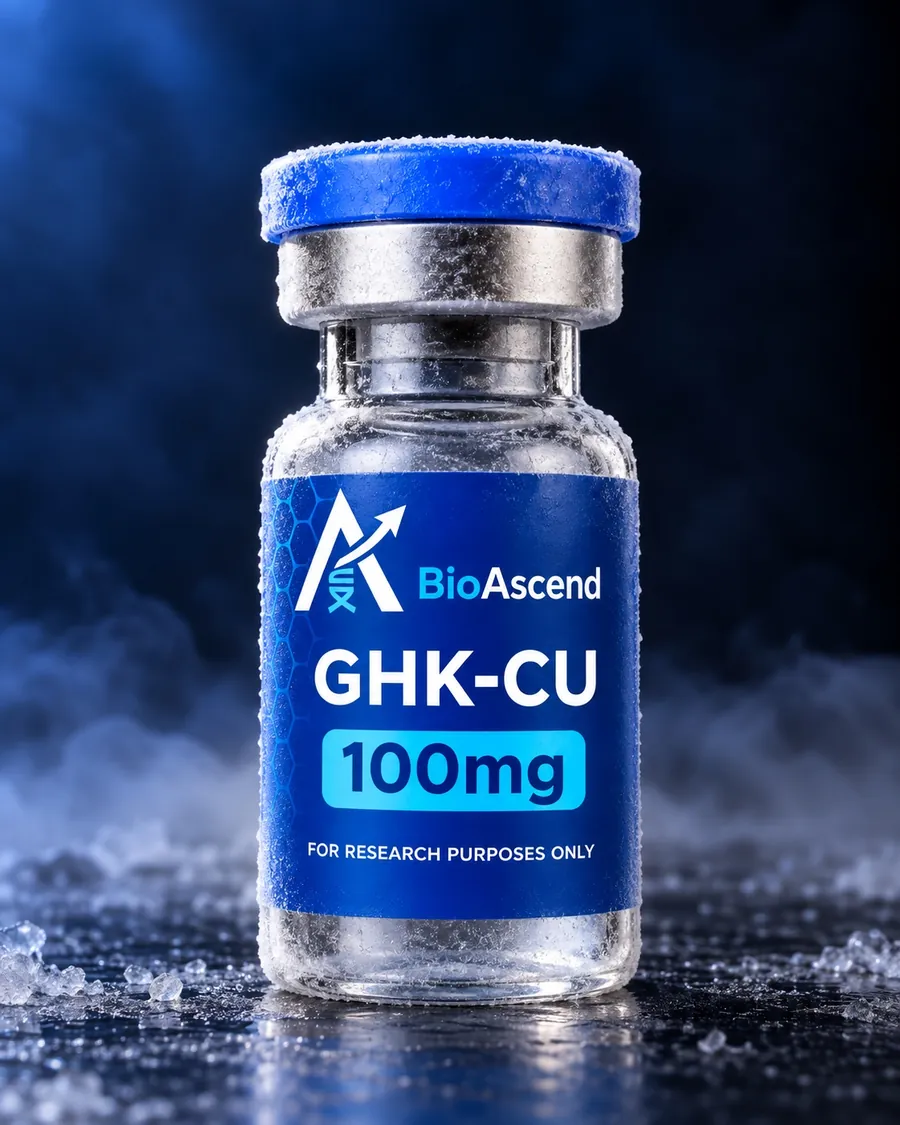
GHK-Cu is a common ingredient in topical cosmetic formulations such as serums and creams, where it's typically present at low concentrations. Research-grade GHK-Cu is supplied as a concentrated lyophilized powder for laboratory use, such as our GHK-Cu 100mg. It's also one of the four components of the KLOW research blend.
Handling notes
- Store the powder cold, dry and away from light: refrigerated for routine storage and frozen for long-term storage.
- After reconstitution, keep it at 2–8°C and protected from light.
- Our guides on storage and reconstitution cover the details.
Frequently asked questions
What is GHK-Cu?
GHK-Cu is the naturally occurring tripeptide glycyl-L-histidyl-L-lysine (GHK) bound to a copper(II) ion. It's studied for its role in collagen production, extracellular-matrix remodelling, wound repair and skin biology.
What is the difference between GHK and GHK-Cu?
GHK is the peptide on its own. GHK-Cu is the same peptide bound to copper, which is the form most studied for tissue remodelling.
Why is GHK-Cu blue?
The blue colour comes from the copper ion bound to the peptide. It's normal for GHK-Cu, both as a powder and in solution.
Who discovered GHK-Cu?
GHK was first isolated from human plasma by Loren Pickart in 1973.
References
- Pickart L, Margolina A. Regenerative and protective actions of the GHK-Cu peptide in the light of the new gene data. Int J Mol Sci. 2018;19(7):1987.
- Maquart FX, et al. Stimulation of collagen synthesis in fibroblast cultures by the tripeptide-copper complex glycyl-L-histidyl-L-lysine-Cu2+. FEBS Lett. 1988;238(2):343–346.
- Pickart L. The human tri-peptide GHK and tissue remodeling. J Biomater Sci Polym Ed. 2008;19(8):969–988.