Key takeaways
- NAD+ (nicotinamide adenine dinucleotide) is a coenzyme that cycles between NAD+ and NADH to carry electrons in energy metabolism.
- It's also consumed by sirtuins, PARPs and CD38, linking energy status to gene regulation and DNA repair.
- NAD+ levels decline with age in several tissues, a central topic in ageing research.
In this guide
- What is NAD+?
- Carrying electrons
- Fuel for signalling enzymes
- Making and recycling NAD+
- NAD+ and ageing
- Related research
- FAQ
What is NAD+?
Nicotinamide adenine dinucleotide is a coenzyme made of two nucleotides joined through their phosphate groups. It has a molecular weight of 663.43 g/mol (CAS 53-84-9). It's not a peptide; it's a small molecule that works alongside enzymes.
It exists in two forms: NAD+ (oxidised) and NADH (reduced). The constant cycling between the two is how cells move electrons from food molecules to the machinery that makes ATP.
Job 1: carrying electrons
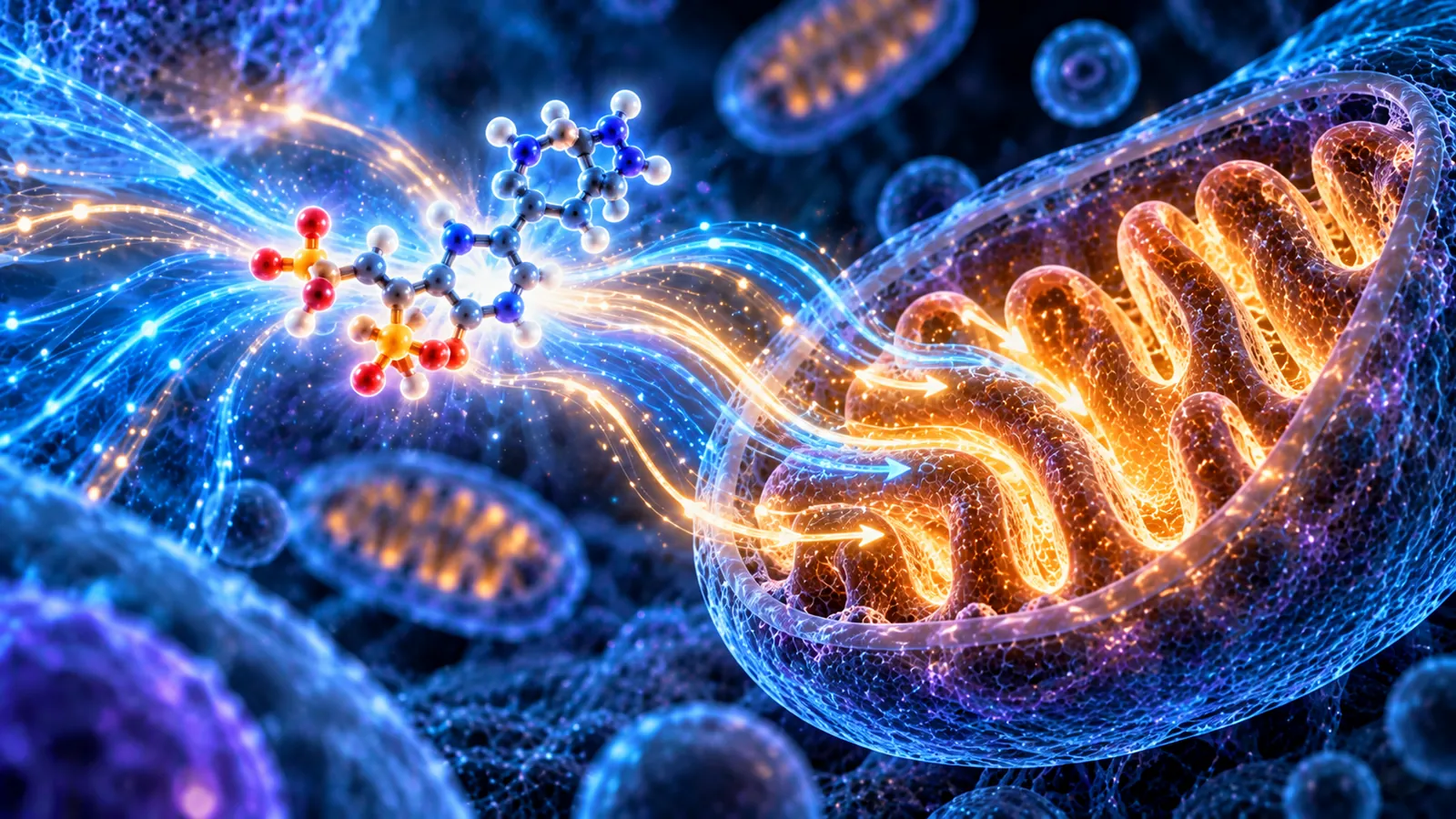
As glucose and fatty acids are broken down in glycolysis, the citric acid cycle and fatty-acid oxidation, NAD+ accepts electrons and becomes NADH. NADH then delivers those electrons to the mitochondrial electron transport chain, which uses them to drive ATP production. NAD+ is regenerated and the cycle repeats.
In this role NAD+ isn't used up; it's recycled. The NAD+/NADH ratio acts as a signal of the cell's metabolic state.
Job 2: fuel for signalling enzymes
Several enzyme families consume NAD+, breaking it down as part of their work:
| Enzyme family | What it does | Why it matters |
|---|---|---|
| Sirtuins (SIRT1–7) | Remove acetyl groups from proteins | Regulate metabolism, stress responses and gene expression |
| PARPs | Build chains used to signal DNA damage | Central to DNA repair |
| CD38 and related enzymes | Break NAD+ down in signalling pathways | Major NAD+ consumers; activity rises with age |
Because these enzymes depend on NAD+ supply, its availability links the cell's energy status directly to gene regulation and genome maintenance.
How cells make and recycle NAD+
- Salvage pathway: the main route in most tissues, recycling nicotinamide released by NAD+-consuming enzymes. The enzyme NAMPT is its rate-limiting step.
- From dietary precursors: nicotinic acid and nicotinamide (forms of vitamin B3), as well as nicotinamide riboside (NR) and nicotinamide mononucleotide (NMN).
- De novo synthesis: from the amino acid tryptophan.
NAD+ and ageing research
Research has found that NAD+ levels decline in several tissues with age, likely through a combination of increased consumption (including by CD38) and reduced synthesis. Reviews describe how falling NAD+ availability may affect metabolism, DNA repair, inflammation and cellular senescence (Covarrubias et al., Nature Reviews Molecular Cell Biology, 2021).
Preclinical studies have tested whether raising NAD+, often through precursors like NR and NMN, can influence metabolic and age-related outcomes in animal models (Rajman, Chwalek and Sinclair, Cell Metabolism, 2018). How well these findings translate to humans remains an active question.
Related research
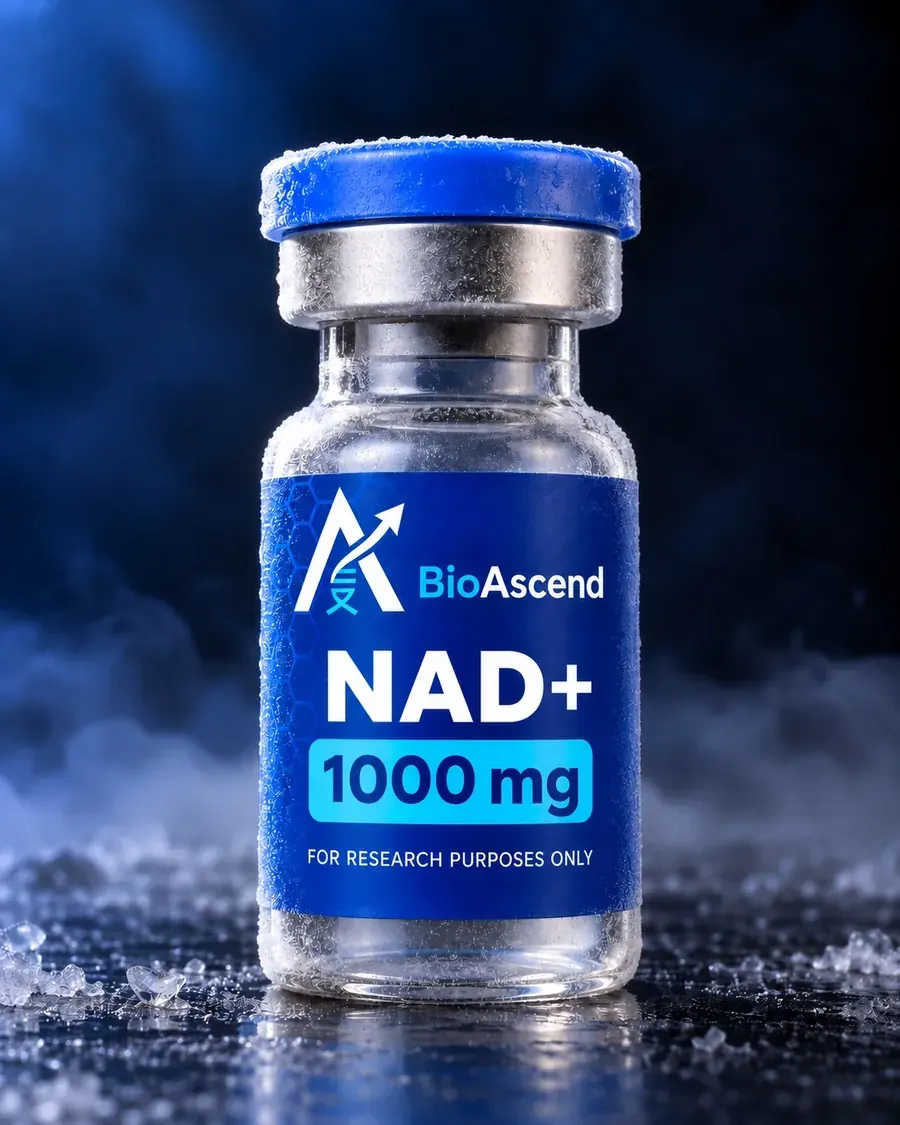
NAD+ connects to several other compounds in mitochondrial research, including MOTS-c and SS-31. Its reduced phosphate form, NADPH, also powers the recycling of glutathione. Research-grade NAD+ is supplied as a 1000mg lyophilized powder; keep it protected from light after reconstitution.
Frequently asked questions
What is NAD+?
NAD+ (nicotinamide adenine dinucleotide) is a coenzyme found in every living cell. It carries electrons in energy metabolism and is consumed by enzymes involved in gene regulation and DNA repair.
What is the difference between NAD+ and NADH?
NAD+ is the oxidised form and NADH is the reduced form. NAD+ accepts electrons during metabolism to become NADH, which then donates them to the mitochondrial electron transport chain.
Is NAD+ a peptide?
No. NAD+ is a dinucleotide coenzyme, a small molecule made of two nucleotides, not a chain of amino acids.
Why do NAD+ levels decline with age?
Research points to a combination of increased consumption, including by the enzyme CD38, and reduced synthesis. The causes and consequences are an active area of ageing research.
References
- Covarrubias AJ, Perrone R, Grozio A, Verdin E. NAD+ metabolism and its roles in cellular processes during ageing. Nat Rev Mol Cell Biol. 2021;22(2):119–141.
- Rajman L, Chwalek K, Sinclair DA. Therapeutic potential of NAD-boosting molecules: the in vivo evidence. Cell Metab. 2018;27(3):529–547.