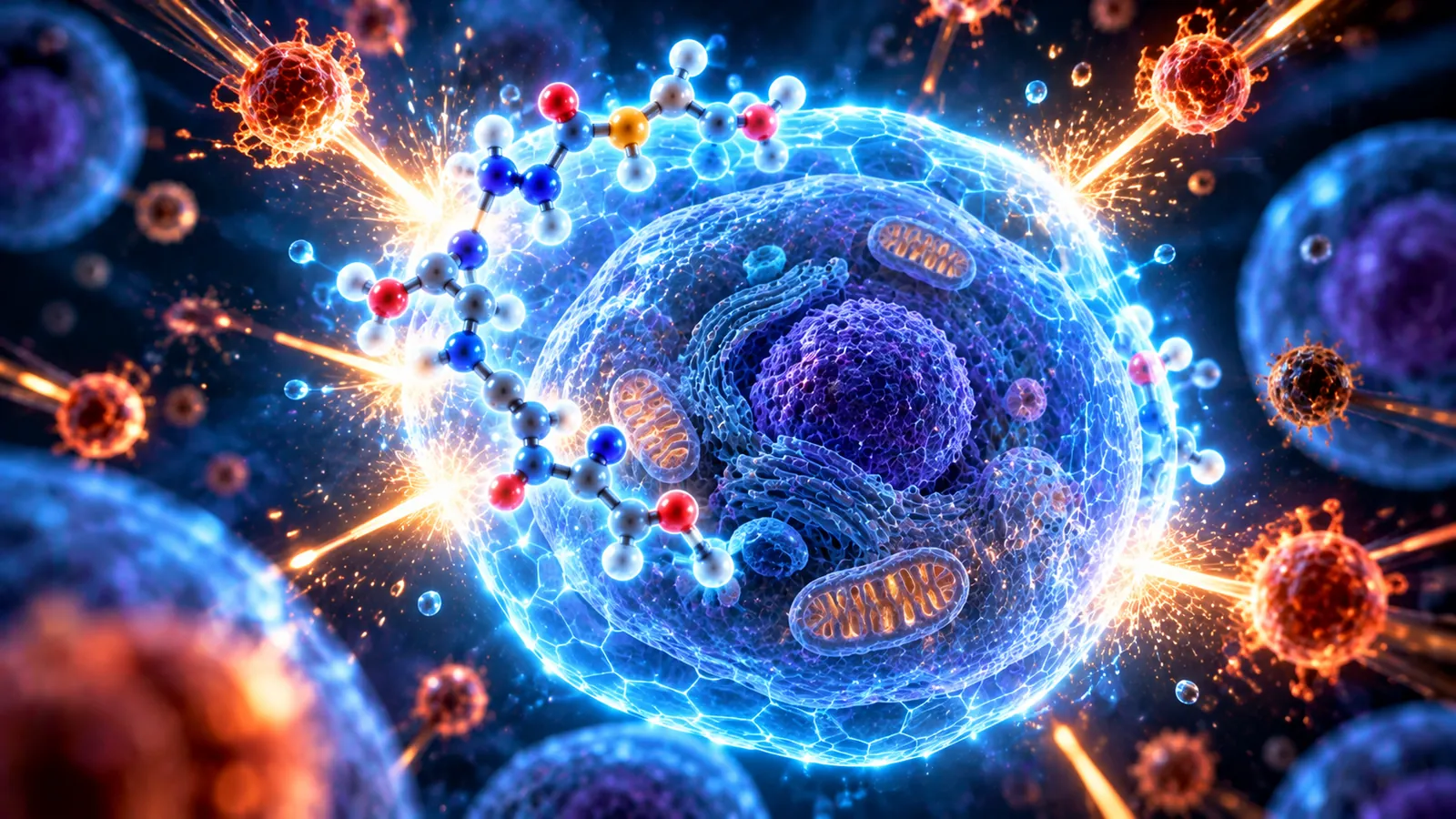
Key takeaways
- Glutathione (GSH) is a tripeptide of glutamate, cysteine and glycine, and the most abundant non-protein thiol in cells.
- It neutralises reactive oxygen species and becomes GSSG; the GSH:GSSG ratio is a key marker of oxidative stress.
- It's also a substrate for glutathione peroxidases and glutathione S-transferases, linking it to redox signalling and detoxification.
In this guide
- What is glutathione?
- What is oxidative stress?
- How it works
- The GSH:GSSG ratio
- How cells make it
- Research areas
- FAQ
What is glutathione?
Glutathione (γ-L-glutamyl-L-cysteinyl-glycine) is a tripeptide with a molecular weight of 307.32 g/mol (CAS 70-18-8). It's found in almost every cell, often at millimolar concentrations.
Its structure has one unusual feature: glutamate is joined to cysteine through its side chain, forming a gamma peptide bond instead of the usual alpha bond. This protects glutathione from breakdown by most peptidases, which helps explain how cells maintain such high levels.
What is oxidative stress?
Normal metabolism, especially in mitochondria, produces reactive oxygen species (ROS) such as hydrogen peroxide and superoxide. In small amounts they act as signals. In excess, they damage lipids, proteins and DNA. Oxidative stress describes the state where ROS production outpaces the cell's ability to neutralise them.
How glutathione works
Donating electrons
The thiol (–SH) group on cysteine lets glutathione donate electrons to neutralise ROS and to regenerate other antioxidants, such as vitamins C and E. In the process, two molecules of reduced glutathione (GSH) join to form oxidised glutathione (GSSG).
Recycling
The enzyme glutathione reductase converts GSSG back to GSH, using NADPH as its electron source. This keeps most cellular glutathione in the reduced form under normal conditions.
Enzyme partner
- Glutathione peroxidases use GSH to reduce hydrogen peroxide and lipid peroxides. One member, GPX4, is a key regulator of ferroptosis, a form of cell death driven by lipid peroxidation.
- Glutathione S-transferases attach glutathione to reactive compounds, marking them for removal from the cell.
The GSH:GSSG ratio
Because oxidants convert GSH to GSSG, the ratio of reduced to oxidised glutathione is one of the most widely used measures of a cell's redox state. A falling ratio signals increasing oxidative stress. It's a standard readout in cell and tissue experiments on oxidative damage.
How cells make glutathione
Glutathione is made in two ATP-dependent steps: glutamate-cysteine ligase joins glutamate and cysteine, then glutathione synthetase adds glycine. The first step is rate-limiting, and the supply of cysteine is usually the limiting factor (Lu, Biochimica et Biophysica Acta, 2013).
Key research areas
- Cellular redox balance and the GSH:GSSG ratio
- Oxidative stress and reactive oxygen species
- Glutathione peroxidase and S-transferase pathways
- Ferroptosis and lipid peroxidation
- Detoxification and xenobiotic metabolism
- Glutathione synthesis and cysteine availability
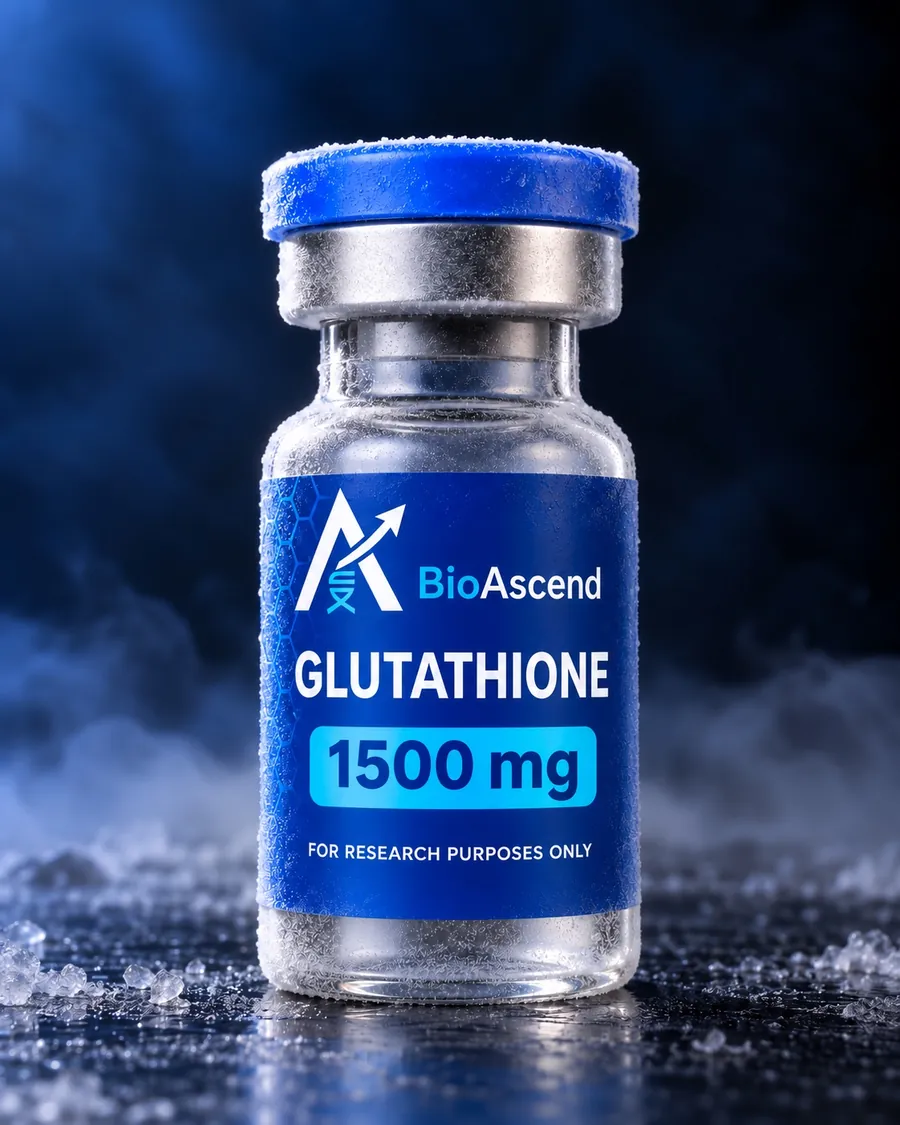
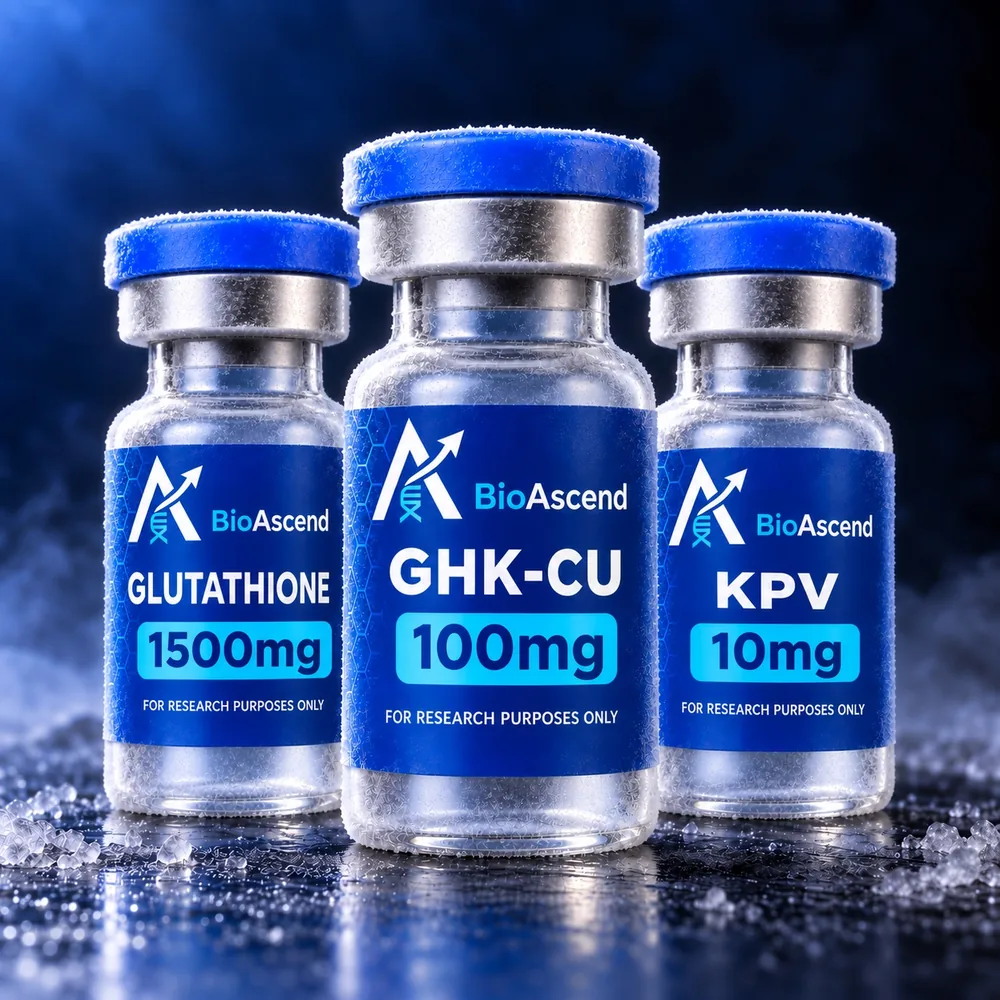
Research-grade glutathione is supplied as a 1500mg lyophilized powder, and it's one of three compounds in our Renewal Research Bundle.
Frequently asked questions
What is glutathione?
Glutathione is a tripeptide of glutamate, cysteine and glycine found in almost every cell. It's the most abundant non-protein thiol and a central part of the cell's antioxidant defences.
What is the difference between GSH and GSSG?
GSH is reduced glutathione, the active antioxidant form. GSSG is oxidised glutathione, formed when two GSH molecules give up electrons. Glutathione reductase converts GSSG back to GSH.
Why is the GSH:GSSG ratio important?
It reflects the cell's redox state. A falling ratio indicates increasing oxidative stress, so it's widely used as a research marker.
Is glutathione a peptide?
Yes. It's a tripeptide, although its gamma peptide bond between glutamate and cysteine is unusual and protects it from most peptidases.
References
- Forman HJ, Zhang H, Rinna A. Glutathione: overview of its protective roles, measurement, and biosynthesis. Mol Aspects Med. 2009;30(1–2):1–12.
- Lu SC. Glutathione synthesis. Biochim Biophys Acta. 2013;1830(5):3143–3153.