In Stock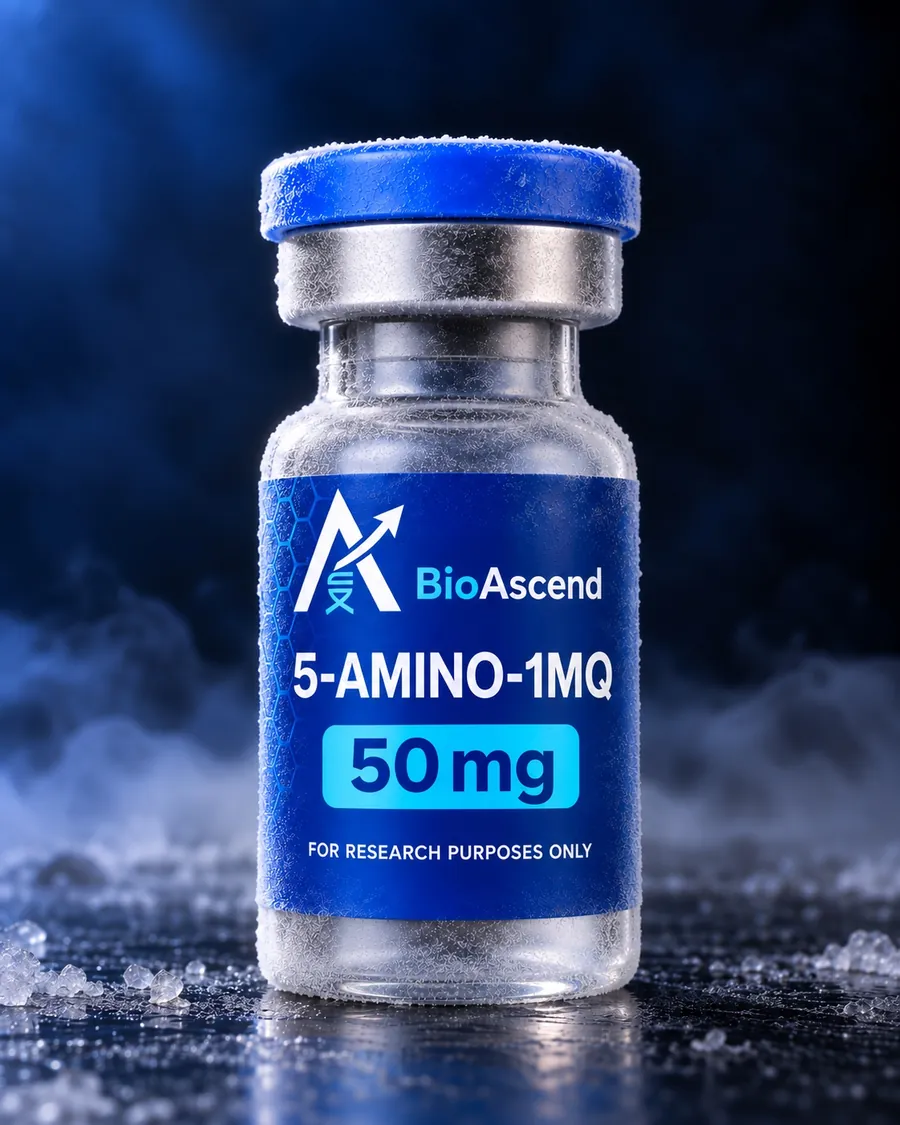
5-Amino-1MQ
50 mg
Orders placed before 2 p.m. ET ship the same business day. Free shipping on orders $250+.
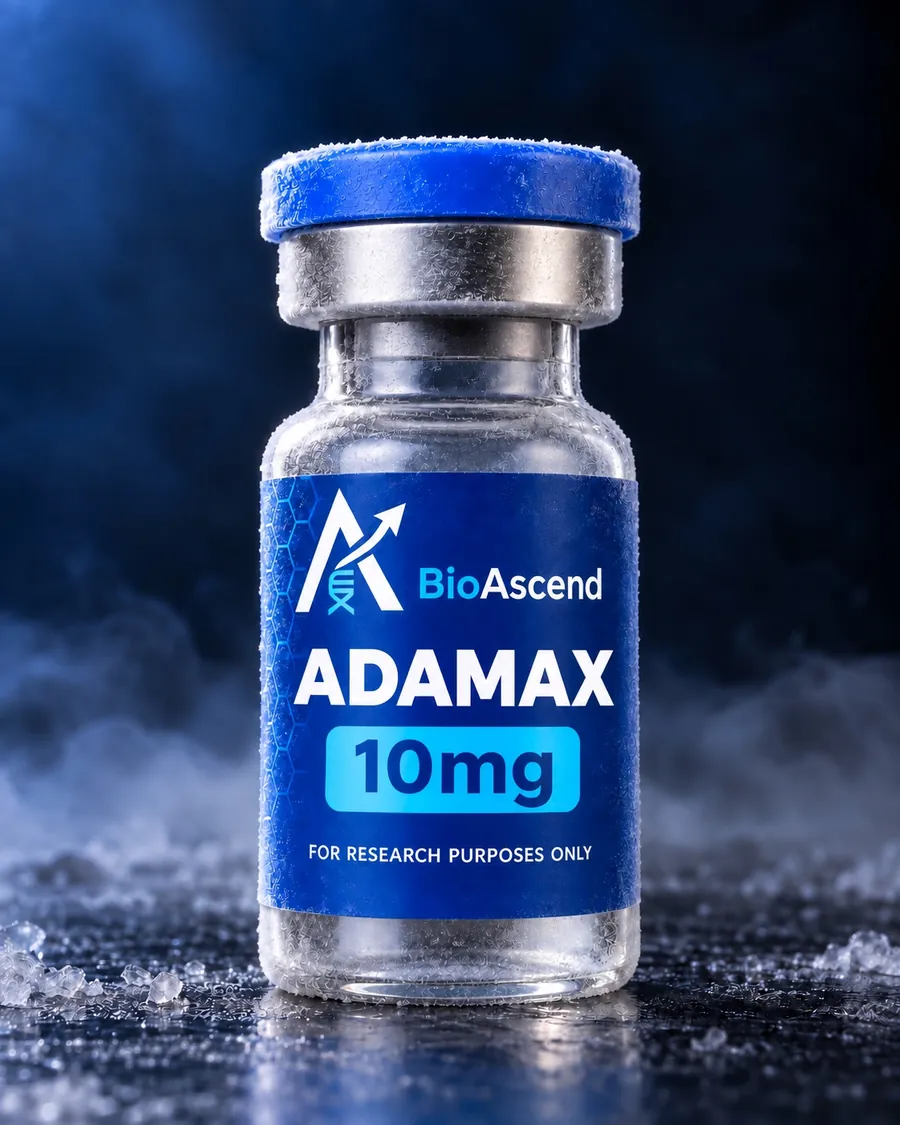
Adamax is an investigational research peptide developed as a modified analogue of Semax, supplied as a 10mg lyophilized vial. It is studied in research on neurotrophic signalling, neuronal function and cognitive processes.
Adamax is a newer research peptide derived from Semax, the ACTH(4-10)-based heptapeptide. Its structure includes modifications intended to change its stability and activity compared with the original Semax sequence. Third-party testing of BioAscend's Adamax identified a molecular mass of about 1032 Da, larger than Semax at about 814 Da.
Unlike Semax, Adamax has very little peer-reviewed literature. Most of what is known about its likely research applications comes from the established literature on Semax and related melanocortin-derived peptides.
Semax, the parent peptide, has been studied for its effects on brain-derived neurotrophic factor (BDNF) and its receptor TrkB, which support neuron survival and synaptic plasticity (Dolotov et al., Brain Research, 2006). Researchers interested in Adamax typically investigate whether its modifications alter these neurotrophic and cognitive effects, or the peptide's stability, relative to Semax.
Because published data on Adamax itself are limited, it is best suited to exploratory and comparative laboratory research. Findings on Semax should not be assumed to apply to Adamax.
Adamax is a modified analogue of Semax. It is larger (about 1032 Da versus about 814 Da for Semax) and is studied to see how its modifications change activity and stability compared with the parent peptide.
Very little. Adamax is a newer compound, and most of its research context comes from studies of Semax and related peptides.
Store unopened vials in a cool, dry place away from direct light, with refrigeration recommended for long-term storage. After reconstitution, keep the vial refrigerated at 2–8°C.
Published literature is summarised for scientific context only. It is not a claim about this product, and this product is not for human or veterinary use.
Store unopened vials in a cool, dry environment away from direct light. For long-term storage, refrigeration is recommended. After reconstitution, keep refrigerated at 2–8°C and protect from direct light.
Not for human consumption. This product is sold exclusively as a research compound for in vitro and laboratory use by qualified researchers. It is not a drug, supplement, or cosmetic, is not intended for human or veterinary use, and is not intended to diagnose, treat, cure, or prevent any disease. No dosing, administration, or therapeutic claims are made or implied.
Published literature referenced on this page is provided for scientific context only and does not constitute a claim about this product or evidence of safety or efficacy in any organism.
By purchasing this product, you confirm that it will be used for legitimate research purposes in accordance with applicable laws and regulations.