Key takeaways
- KPV (Lys-Pro-Val) is the C-terminal tripeptide of α-melanocyte-stimulating hormone (α-MSH).
- It's been reported to reduce NF-κB activation and pro-inflammatory cytokine production in experimental systems.
- It enters intestinal cells through the PepT1 transporter, which has made it a focus of colitis research.
In this guide
- What is KPV?
- Inflammatory signalling basics
- How it's thought to work
- Research areas
- Related research
- FAQ
What is KPV?
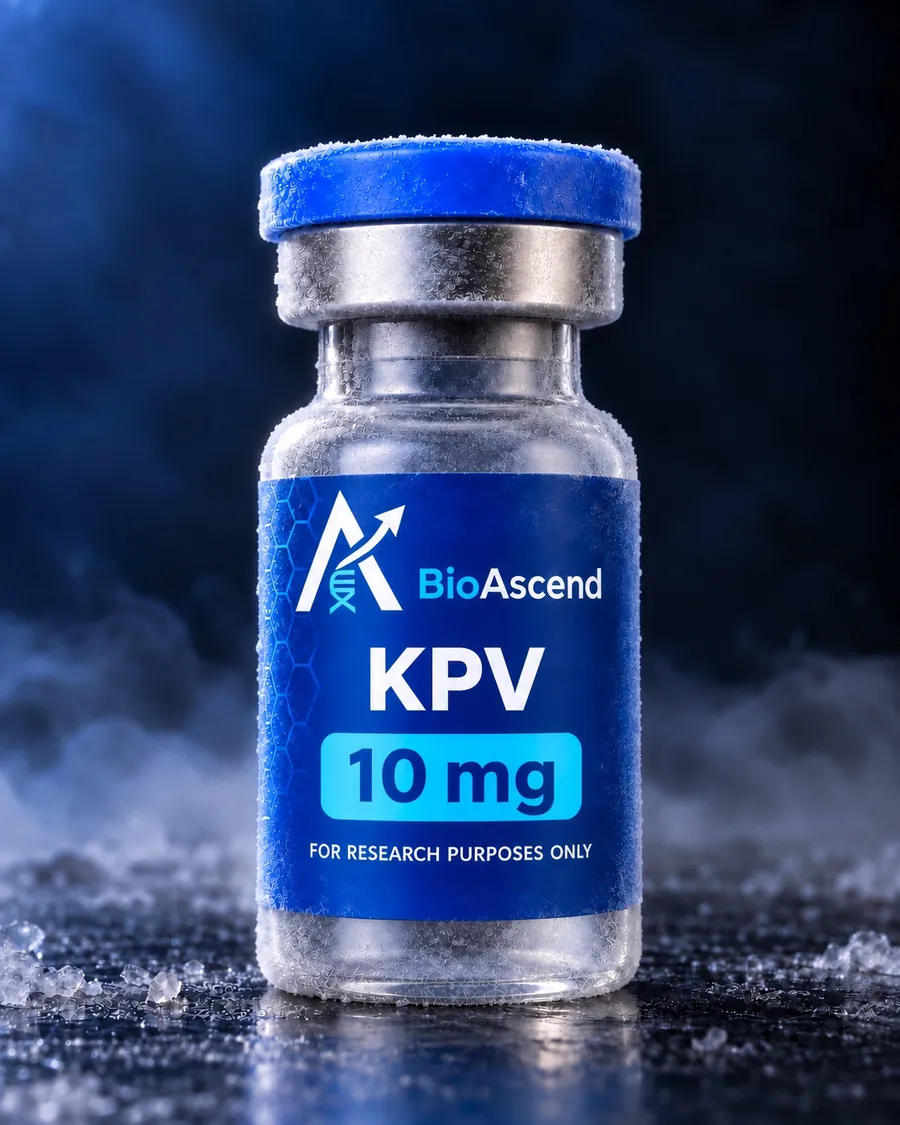
KPV is a tripeptide with the sequence Lys-Pro-Val and a molecular weight of 342.44 g/mol (CAS 67727-97-3). It's the last three amino acids of α-MSH, a 13-amino-acid hormone best known for its role in skin pigmentation.
α-MSH also has well-documented anti-inflammatory activity. When researchers looked for the part of the molecule responsible, they found that much of the effect could be reproduced by this short C-terminal fragment (Brzoska et al., Endocrine Reviews, 2008).
Inflammatory signalling basics
Inflammation is coordinated by signalling pathways inside cells. One of the most important is NF-κB, a transcription factor that switches on genes for pro-inflammatory cytokines such as TNF-α, IL-1β and IL-6. Many anti-inflammatory research compounds work by dampening NF-κB activation.
How KPV is thought to work
NF-κB and cytokines
In experimental systems, KPV has been reported to reduce activation of the NF-κB pathway and lower production of pro-inflammatory cytokines.
PepT1 uptake
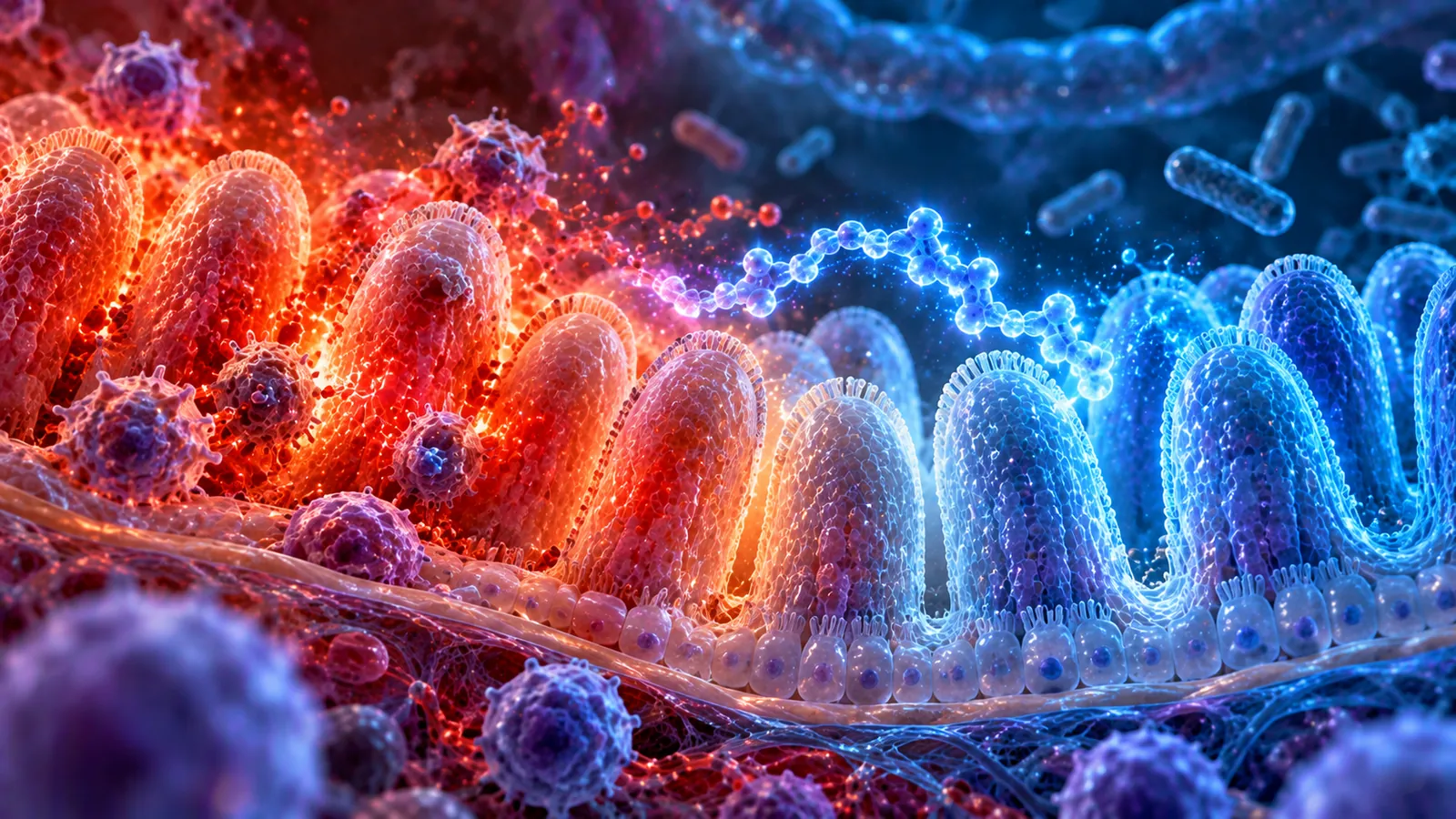
Because it's so small, KPV can be carried into cells by PepT1, a transporter for di- and tripeptides. PepT1 is found in intestinal epithelial cells and is upregulated in the inflamed intestine, which means KPV can reach the cells where inflammation is happening.
Receptor questions
α-MSH acts through melanocortin receptors. Whether KPV's effects depend on these receptors, or work mainly inside the cell after PepT1 uptake, is still being investigated.
What the research has examined
The key study showed that in mouse models of colitis, KPV taken up through PepT1 reduced intestinal inflammation and inflammatory signalling (Dalmasso et al., Gastroenterology, 2008). Research has since extended to:
- Inflammatory bowel disease models
- Epithelial barrier function
- Inflammatory skin models
- Melanocortin peptide biology
These are preclinical findings. KPV is not an approved medicine and is named among unauthorized peptides in Health Canada's 2026 advisory.
Related research
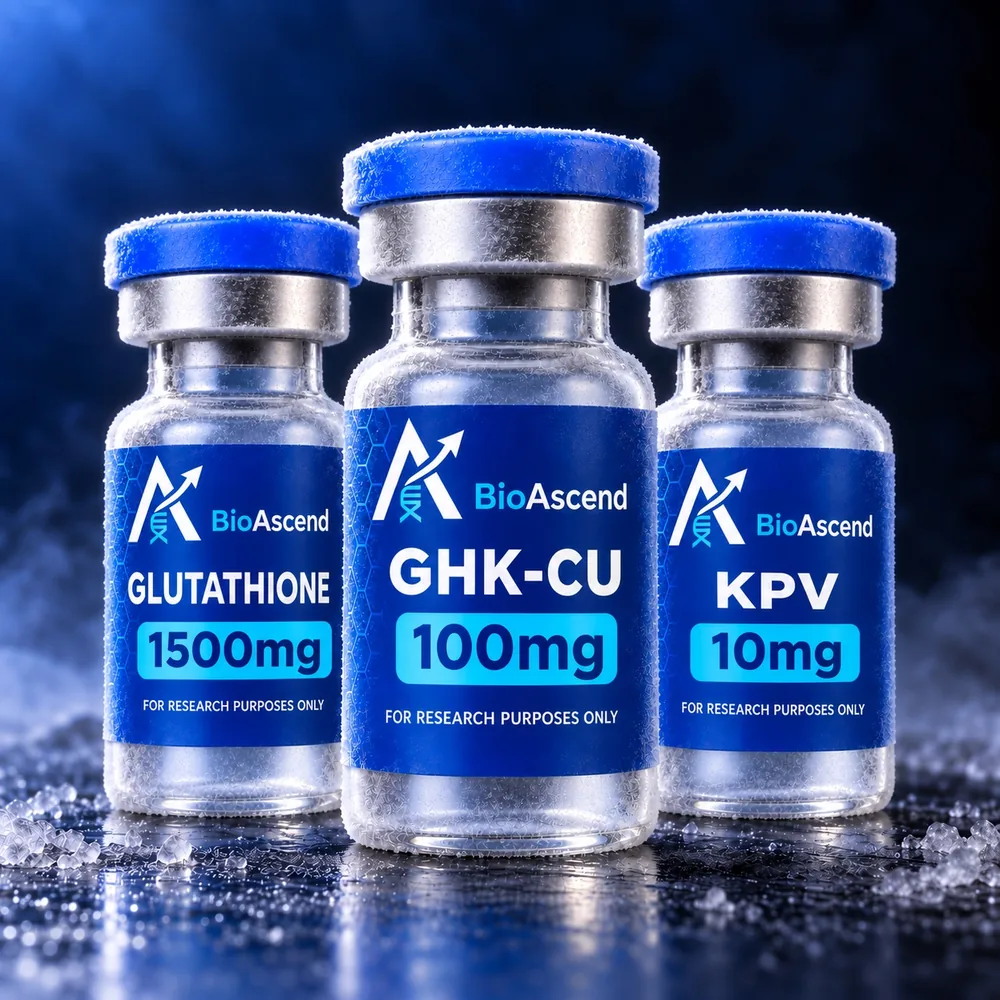
KPV is one of four compounds in the KLOW blend, where it adds an inflammatory-signalling pathway alongside BPC-157, TB-500 and GHK-Cu. It's also part of our Renewal Research Bundle with GHK-Cu and glutathione. See peptide blends explained for more.
Frequently asked questions
What is KPV?
KPV is a tripeptide (Lys-Pro-Val) that forms the last three amino acids of α-melanocyte-stimulating hormone (α-MSH). It's studied for its anti-inflammatory activity.
How does KPV work?
In experimental systems, it has been reported to reduce NF-κB activation and pro-inflammatory cytokine production. It can enter intestinal cells through the PepT1 peptide transporter.
Why is KPV studied in colitis models?
PepT1, which carries KPV into cells, is upregulated in the inflamed intestine. In mouse colitis models, KPV taken up this way reduced intestinal inflammation.
Is KPV the same as α-MSH?
No. KPV is a three-amino-acid fragment of α-MSH, which is 13 amino acids long. KPV reproduces much of α-MSH's anti-inflammatory activity but not its pigmentation role.
References
- Dalmasso G, et al. PepT1-mediated tripeptide KPV uptake reduces intestinal inflammation. Gastroenterology. 2008;134(1):166–178.
- Brzoska T, et al. Alpha-melanocyte-stimulating hormone and related tripeptides: biochemistry, antiinflammatory and protective effects in vitro and in vivo. Endocr Rev. 2008;29(5):581–602.