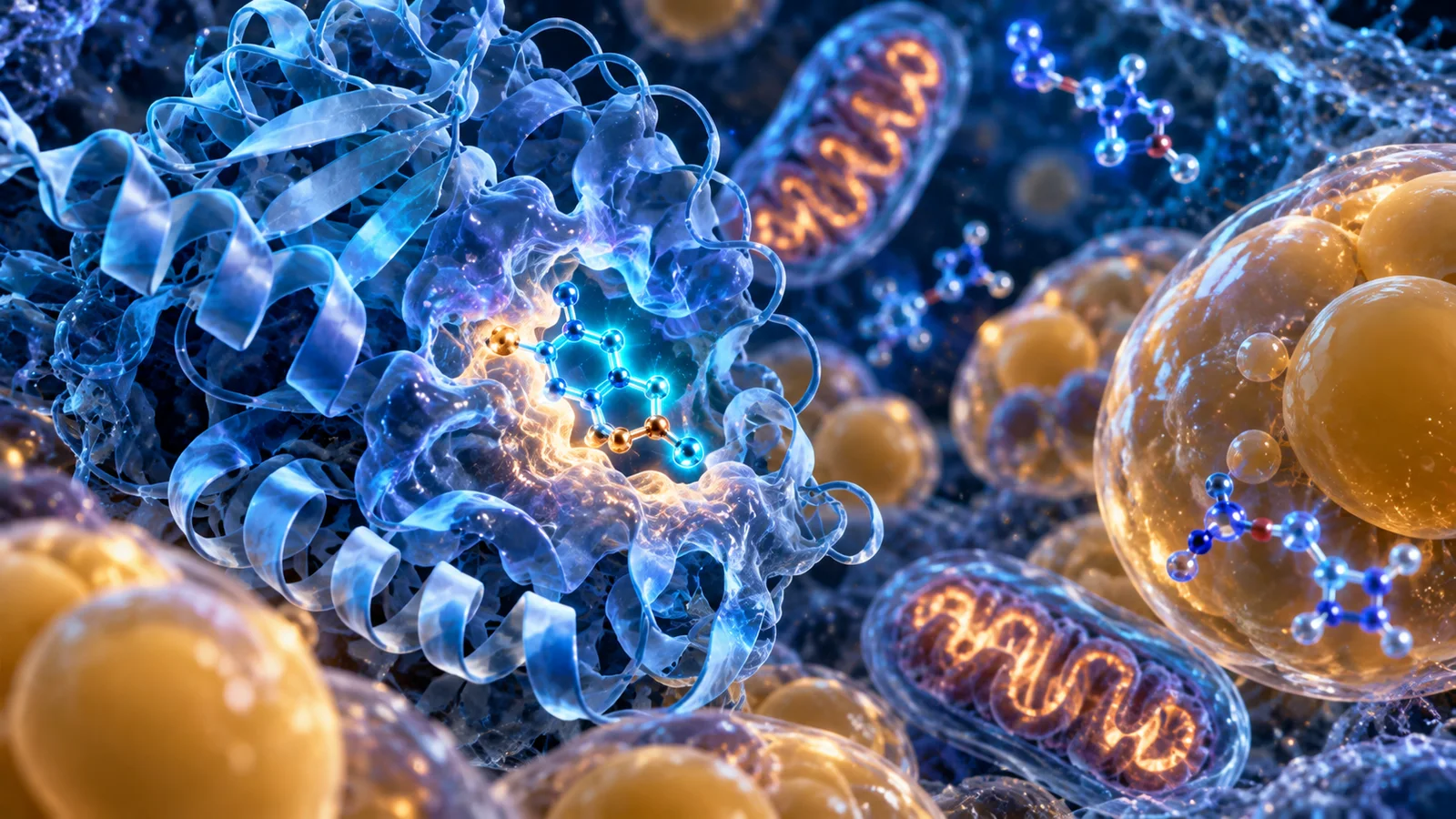
Key takeaways
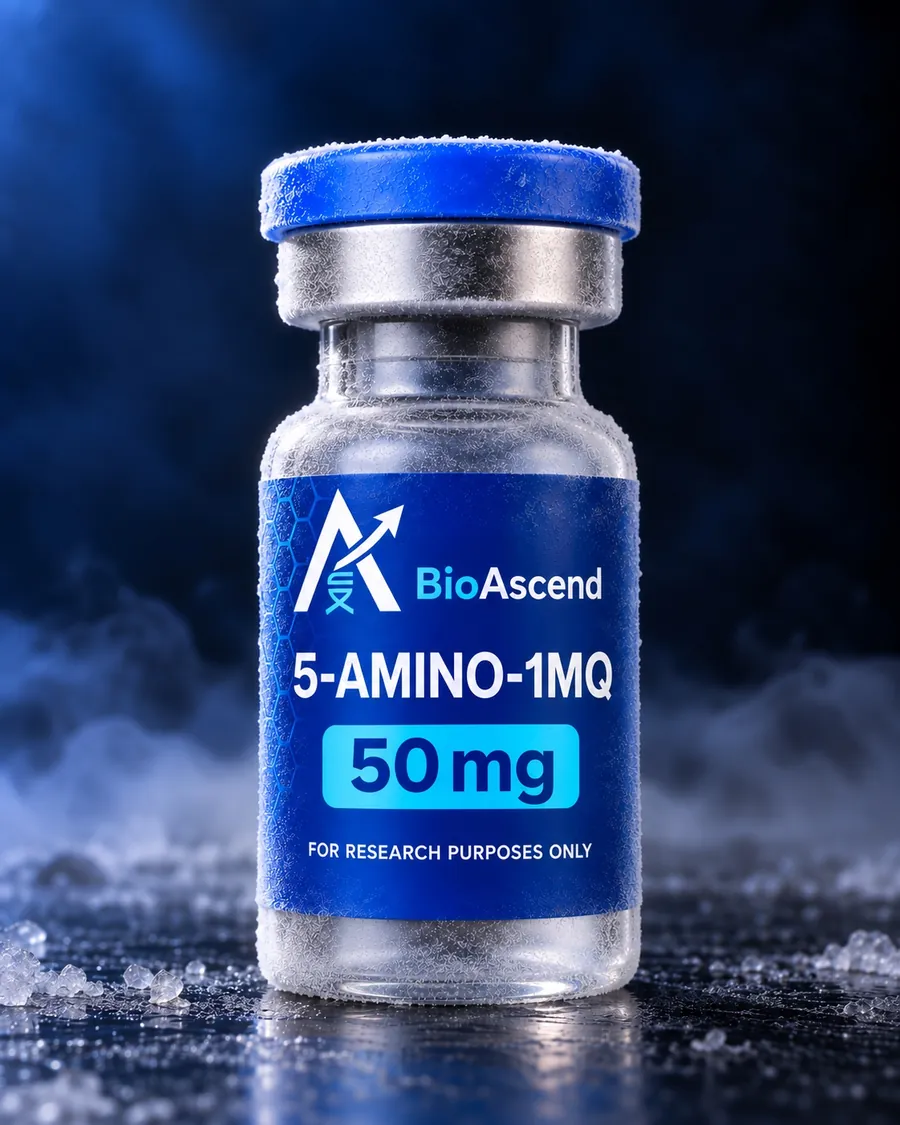
- 5-Amino-1MQ (5-amino-1-methylquinolinium) is a small-molecule inhibitor of the enzyme NNMT, not a peptide.
- NNMT consumes nicotinamide and SAM, so its activity can affect the NAD+ salvage pathway and cellular methylation.
- Mouse studies reported effects on adipose tissue and aged muscle stem cells. There are no published human trials.
In this guide
View 5-Amino-1MQ 50mg →What is 5-Amino-1MQ?
5-Amino-1MQ belongs to a series of methylquinolinium compounds developed as inhibitors of NNMT. Researchers screened and refined these analogues to find ones that were selective for NNMT and could cross cell membranes, and 5-amino-1-methylquinolinium emerged as one of the most potent, with inhibition reported in the low micromolar range (Neelakantan et al., Journal of Medicinal Chemistry, 2017).
Because it's small and cell-permeable, it's useful as a tool compound: a way to switch down NNMT activity inside cells and see what changes.
What NNMT does
NNMT transfers a methyl group from S-adenosylmethionine (SAM), the cell's main methyl donor, onto nicotinamide, a form of vitamin B3. The product, 1-methylnicotinamide, is mostly cleared from the cell.
That simple reaction touches two important systems:
- NAD+: nicotinamide is recycled into NAD+ through the salvage pathway. Methylating it removes it from that recycling loop.
- Methylation: every reaction uses up a SAM molecule, which could otherwise be used for methylating DNA, histones and other targets.
NNMT is highly expressed in the liver and in white adipose tissue. A key study found that NNMT levels were higher in the fat tissue of obese and diabetic mice, and that knocking NNMT down protected mice against diet-induced obesity (Kraus et al., Nature, 2014). That made NNMT an interesting target for metabolic research.
What the research has examined
Adipose tissue models
In mice fed a high-fat diet, treatment with NNMT inhibitors from the methylquinolinium series was reported to reduce body weight and white adipose mass, shrink adipocyte size and lower plasma cholesterol, without changes in food intake. In cultured adipocytes, the inhibitors increased intracellular NAD+ and SAM and reduced lipogenesis (Neelakantan et al., Biochemical Pharmacology, 2018).
Aged muscle stem cells
A separate study looked at muscle regeneration in aged mice. NNMT inhibition was reported to activate senescent muscle stem cells and improve the regenerative capacity of aged skeletal muscle after injury (Neelakantan et al., Biochemical Pharmacology, 2019).
Other research areas
- NAD+ metabolism and the salvage pathway
- SAM availability and epigenetic methylation
- NNMT in cancer cell metabolism, where it's often overexpressed
- Liver lipid metabolism
What isn't known
The published research on 5-Amino-1MQ is preclinical and comes from a small number of research groups. There are no published clinical trials, and pharmacokinetics, long-term effects and safety in people haven't been established.
5-Amino-1MQ is a research compound only. It is not an approved medicine or dietary supplement, and animal findings don't establish safety or effects in people.
Related research
Because NNMT affects nicotinamide recycling, 5-Amino-1MQ research often overlaps with work on NAD+ and cellular energy. For another compound studied in cellular energy regulation, see MOTS-c and mitochondrial function.
Frequently asked questions
Is 5-Amino-1MQ a peptide?
No. 5-Amino-1MQ (5-amino-1-methylquinolinium) is a small molecule from the quinolinium family. It's often sold alongside research peptides but is chemically quite different.
What does 5-Amino-1MQ inhibit?
It inhibits nicotinamide N-methyltransferase (NNMT), an enzyme that methylates nicotinamide using S-adenosylmethionine (SAM) as the methyl donor.
How is NNMT connected to NAD+?
Nicotinamide is recycled into NAD+ through the salvage pathway. NNMT methylates nicotinamide, removing it from that pathway, so blocking NNMT can increase the nicotinamide available for NAD+ production in cells.
Has 5-Amino-1MQ been tested in humans?
No published clinical trials exist. The research to date comes from cell studies and mouse models.
References
- Kraus D, et al. Nicotinamide N-methyltransferase knockdown protects against diet-induced obesity. Nature. 2014;508(7495):258–262.
- Neelakantan H, et al. Structure–activity relationship for small molecule inhibitors of nicotinamide N-methyltransferase. J Med Chem. 2017;60(12):5015–5028.
- Neelakantan H, et al. Selective and membrane-permeable small molecule inhibitors of nicotinamide N-methyltransferase reverse high fat diet-induced obesity in mice. Biochem Pharmacol. 2018;147:141–152.
- Neelakantan H, et al. Small molecule nicotinamide N-methyltransferase inhibitor activates senescent muscle stem cells and improves regenerative capacity of aged skeletal muscle. Biochem Pharmacol. 2019;163:481–492.